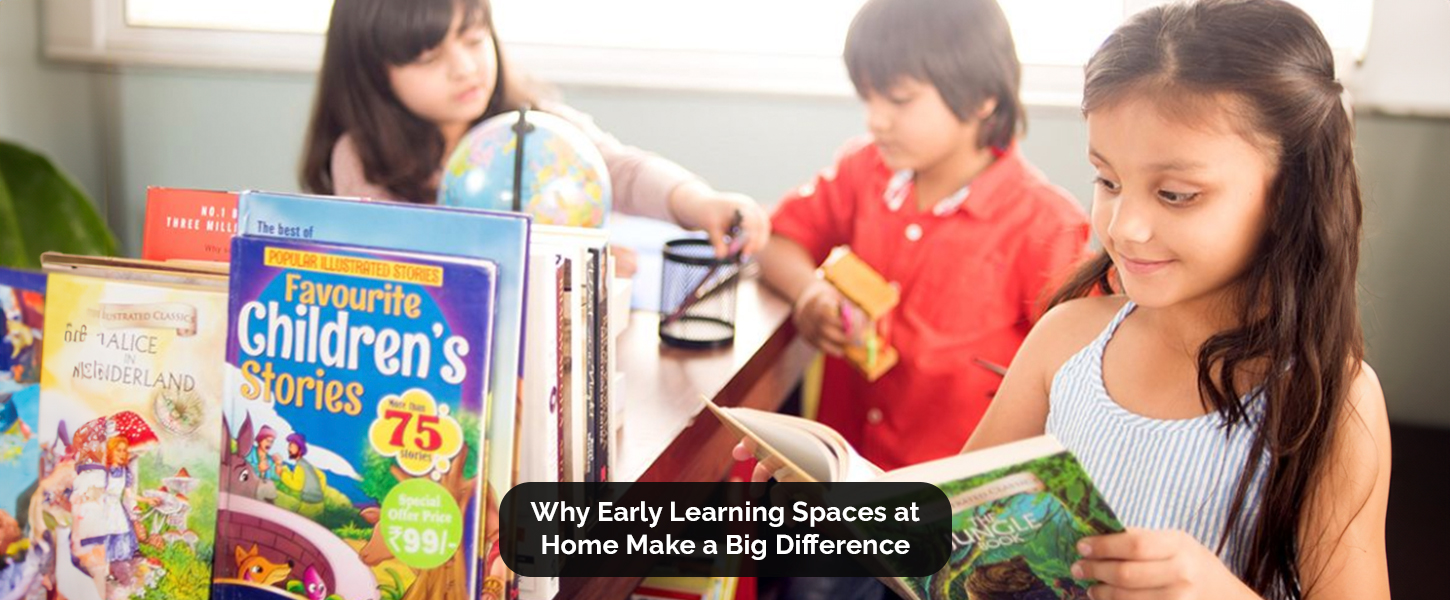

As parents, we put a lot of thought and checks when choosing the right school for our kids. But we often overlook the fact that our children spend more time at home than in school. Colorful classrooms with learning environments and playful arenas add massive value when choosing the right educational space. Similarly, creating an effective learning space at home for your toddler is more than just a matter of convenience; it’s an essential part of their early development. The environment in which children learn has a profound impact on their cognitive, emotional, and social growth, especially during the critical early years. As more parents seek ways to foster educational growth from the comfort of home, having a structured and positive space that resonates with learning becomes even more vital.
In this blog, we’ll explore the importance of learning spaces at home, how to set one up, and why this can significantly influence early childhood development.
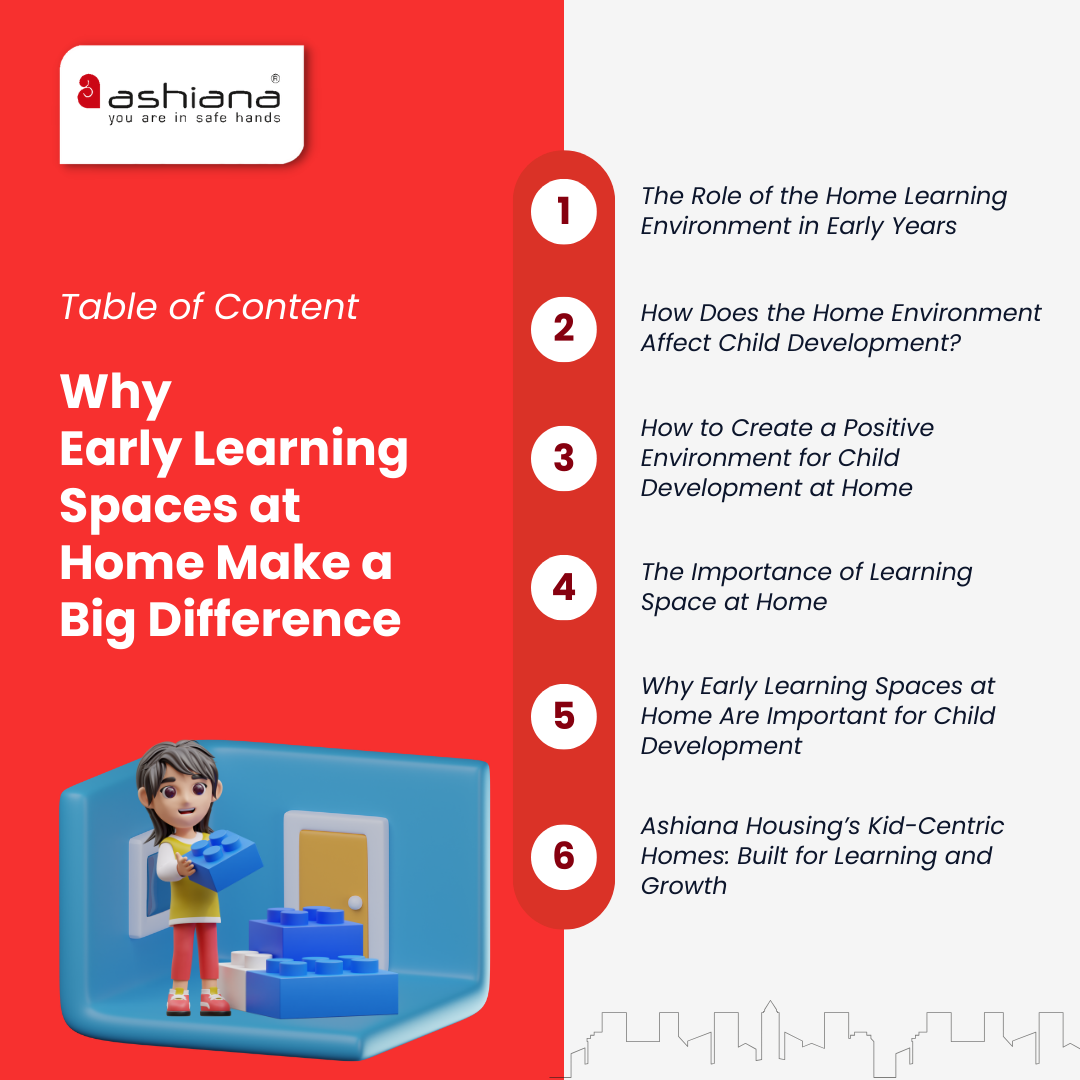
The learning environment at home during the early years is crucial in shaping a child’s learning habits and overall development. Children absorb everything around them like sponges, especially during their toddler to teen phase. The surroundings they spend their time in should be enriching, stimulating, and well-organized to cater to their curiosity and eagerness to learn.
A well-designed home allows children to engage in activities that promote cognitive skills, problem-solving abilities, and motor skills development. It also fosters independence by giving them a haven to explore independently.
The home environment is crucial for a child’s development, shaping their language, motor, and cognitive skills from birth. Children learn from their surroundings and interactions with family, but modern challenges like busy schedules and gadget overuse can hinder growth. To counter this, creating safe, engaging indoor and outdoor spaces helps children learn and interact, promoting holistic development. Providing this balanced environment at home and beyond supports holistic development and helps children reach their full potential.
Creating a learning space at home does more than just facilitate learning; it helps children build the skills they need for long-term success. Children thrive when you integrate learning with play, offer a sense of routine, and provide access to educational tools. These early learning environments are fundamental to fostering children’s curiosity, creativity, and problem-solving abilities, thus promoting overall growth.
You might be thinking, why can’t a child just sit on the family couch and learn there? While it’s feasible, it’s not always the most effective option. Young children can get easily distracted without a dedicated learning space, and they might not have everything they need within reach. Plus, having a consistent spot helps them develop routines, focus, and self-discipline, which are crucial for their early learning. Studies show that children with access to structured learning spaces are more likely to succeed academically and socially. So, as cosy and convenient as the couch may be, it may not provide the best environment for structured learning.
In a nutshell, learning spaces at home largely impact our young ones as follows:
Creating the best learning spaces goes beyond just setting aside a physical area and organising toys for your little one. It’s also about the approach you take in fostering their growth and development within that space. A well-designed learning environment not only requires discipline and encouragement but also creates a supportive atmosphere where your child feels motivated to play and learn through positive reinforcement.
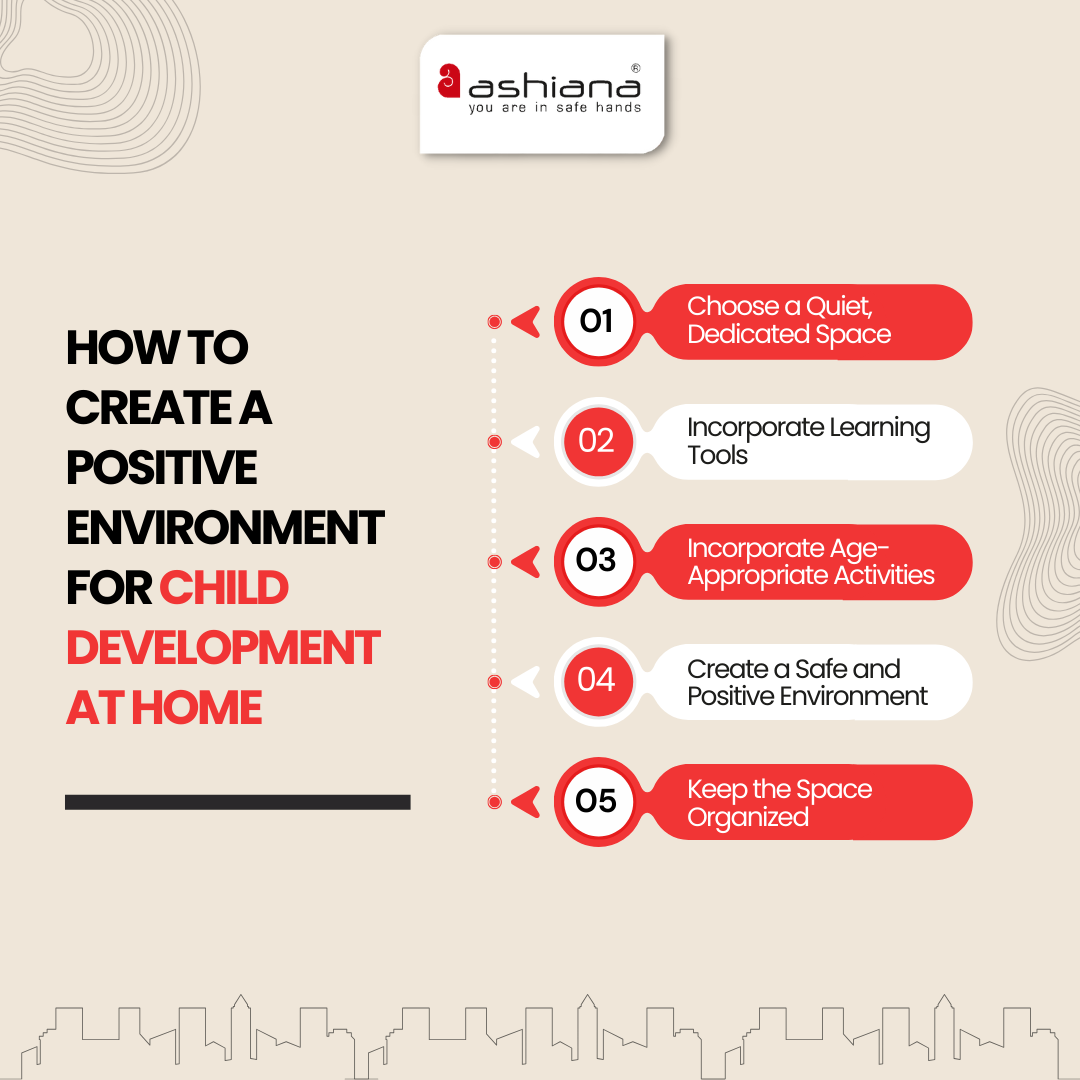
The role of the environment in child development is pivotal. A stimulating and well-structured space allows your child to learn and grow independently. Here’s how you can create a learning space at home that nurtures early childhood development:
The importance of the home environment is evident when you observe how quickly young children can absorb and apply new concepts. A stimulating, organised, and engaging learning environment creates a foundation for lifelong learning. The sooner you establish a home learning environment, the more effectively it contributes to developing cognitive and motor skills, emotional well-being, and a child’s overall potential.
Even by textbook definition, Kid Centric Homes are designed as housing communities that prioritise creating a safe and nurturing environment for children’s growth. These projects offer a wide range of sports facilities, extracurricular activities, and games, blending fun with learning in a single, comprehensive space.
When creating ideal learning spaces at home, Ashiana Housing Kid Centric Homes are a prime example. With child-friendly amenities, educational hubs, and secure play areas, these homes offer the perfect environment for fostering your child’s growth.
What significantly adds to these learning spaces at home is the presence of creative & educative ‘Learning Hubs’ at Ashiana Housing. These inspiring spaces bridge the gap between home and school, helping children develop well-rounded personalities. With world-class amenities, the Learning Hub encourages exploration across multiple disciplines, ensuring children are ready to face tomorrow’s challenges.
The Learning Hub also features Ashiana’s Live & Learn Program, a cornerstone of the brand’s kid-centric vision. Managed by a Learning Hub Manager, this program offers a balanced mix of activities, from music to martial arts, designed to nurture both left-brain and right-brain development. With specialised coaches, monthly activity calendars, and exciting workshops and excursions, children are constantly engaged in learning. This program fosters independence, responsibility, and outgoing personalities, all within the safety of a gated community.
Ashiana Housing’s dedication to providing well-rounded development environments makes their kid-centric homes ideal for nurturing young minds.
Join 1000+ of fellow readers. Get expert real estate knowledge straight to your inbox absolutely free. Just enter your email address below.


Leave a Reply