

In today’s dynamic financial landscape, managing personal finances wisely is crucial for securing a stable future. One of the most effective ways to do this is by investing in Provident Funds (PF), which offers individuals a disciplined and structured way to save for retirement and long-term goals. In this blog, we will explore the significance of provident funds and the different types available in India, along with their benefits.
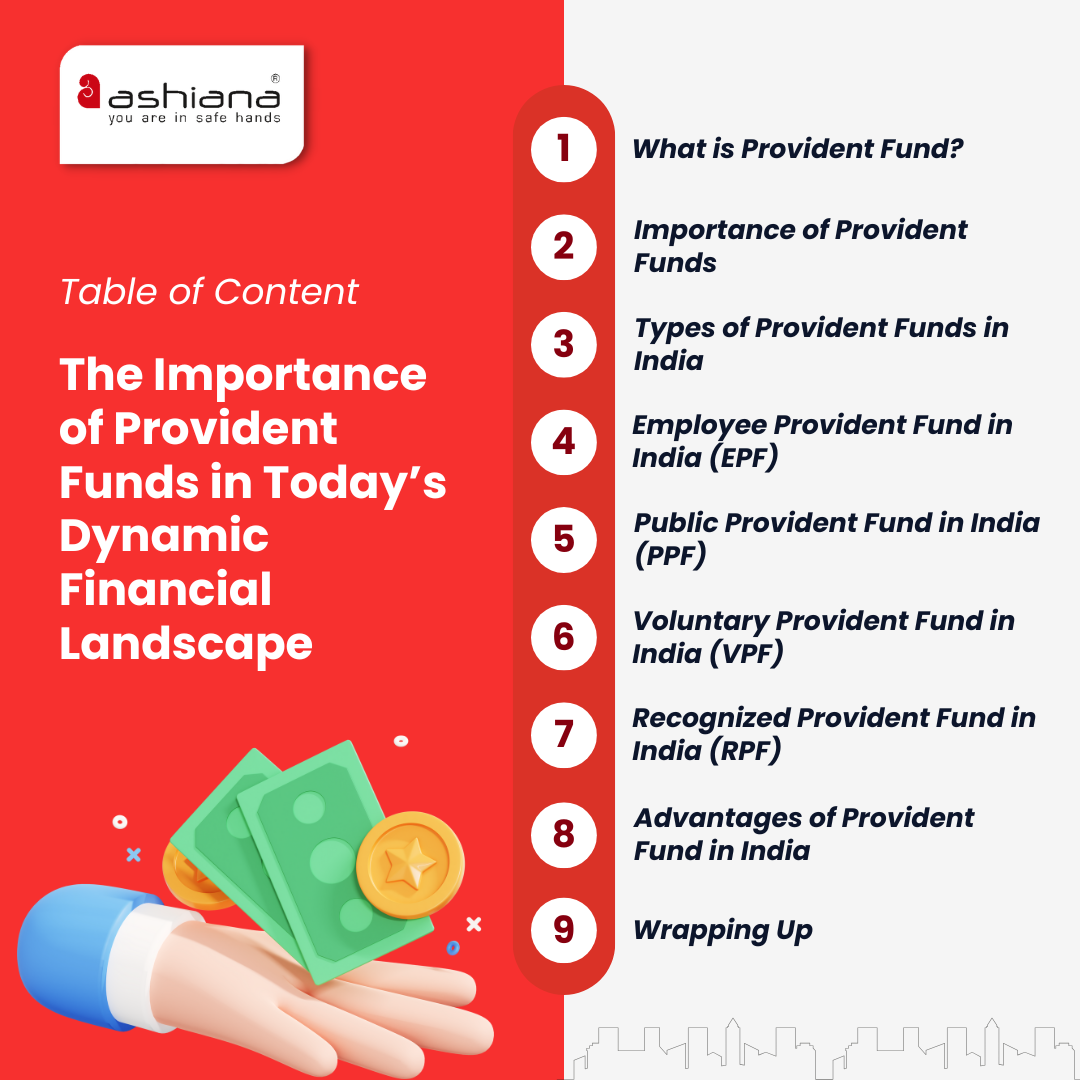
A provident fund is a retirement savings scheme managed by the government or an employer. It involves regular contributions from both the employee and the employer, which accumulate over time and generate interest. The collected funds are primarily meant to provide financial support to individuals once they retire or face an unexpected financial crisis. Provident funds are a secure and reliable way to build savings thanks to government-backed schemes and tax advantages.
Provident funds are vital in ensuring financial security during retirement or unforeseen needs. The importance of a provident fund lies in its ability to:
Also read: The Income Tax Act 2025- Everything You Need to Know Before Filing for Income Tax FY24-25
In India, several types of provident funds cater to different needs, including mandatory and voluntary options. These include:
The Employee Provident Fund (EPF) is a mandatory scheme for organizations with over 20 employees. The employer and the employee contribute a fixed percentage of the employee’s salary to the EPF account. This scheme is managed by the Employees’ Provident Fund Organisation (EPFO). The accumulated balance earns interest, which is credited annually. Due to its convenience and stability, EPF is one of India’s most popular retirement savings options.
The Public Provident Fund (PPF) is a voluntary, government-backed savings scheme for Indian citizens. It is a long-term investment option that offers a fixed interest rate and tax benefits under Section 80C. The PPF has a tenure of 15 years, and the contributions made to the fund are eligible for tax deductions. One of the advantages of the PPF is that it is not linked to any employer and can be opened at any post office or designated bank branch.
The Voluntary Provident Fund (VPF) is an extension of the EPF, where employees can contribute an additional amount to their EPF beyond the mandatory 12% of their salary. This allows employees to increase their retirement savings. The contributions to the VPF earn the same interest rate as the EPF, and the VPF also qualifies for tax deductions under Section 80C. VPF is a great option for those who want to enhance their retirement corpus further.
The Recognized Provident Fund (RPF) is a scheme where an employer sets up a provident fund plan for its employees, but the EPFO does not manage the scheme. It is called “recognized” because it meets the criteria set by the Income Tax Department. The employer contributes to the fund, and the employee may also contribute voluntarily. Like the EPF, the RPF also qualifies for tax deductions.
Also read: EPF vs PPF – Full Form, Comparison, Returns & Which is Better
Provident funds offer numerous advantages, making them a preferred choice for long-term savings. Some of the key benefits include:
Provident funds are an essential financial tool everyone should consider to secure their future. Whether it’s the Employee Provident Fund (EPF), Public Provident Fund (PPF), Voluntary Provident Fund (VPF), or Recognized Provident Fund (RPF), each type has its benefits suited to different needs. The key advantage of Provident Funds is their ability to ensure steady financial growth through regular contributions and government-backed security.
In today’s ever-changing financial world, setting up a provident fund is one of the best ways to manage long-term savings and achieve monetary stability in the future. So, whether you’re an employee or a self-employed individual, consider the benefits of a provident fund and make it a part of your financial strategy for a secure and prosperous future.
Join 1000+ of fellow readers. Get expert real estate knowledge straight to your inbox absolutely free. Just enter your email address below.


Leave a Reply