

Excessive screen exposure has become a pressing concern for children in the digital age. While screens are integral to modern life, overuse can profoundly affect children’s cognitive, language, and social-emotional development. This blog elaborates on these impacts and offers thoughtful strategies for parents to effectively manage and reduce screen time, fostering a balanced and healthy lifestyle for their children.
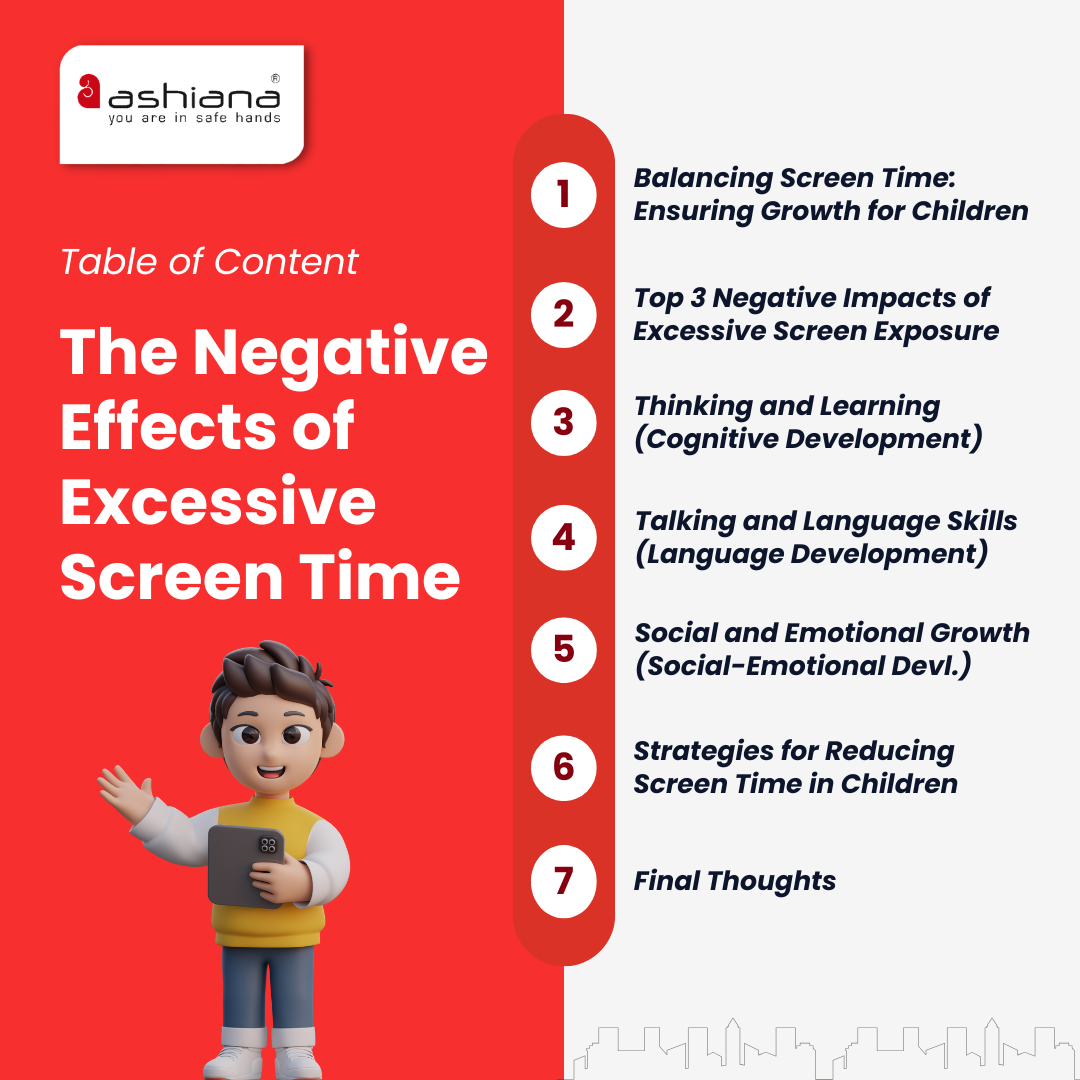
In today’s fast-paced, technology-driven world, screens have become an omnipresent feature of daily life. Children are surrounded by digital devices, From smartphones to tablets to computers and televisions. While these tools offer tremendous opportunities for education and entertainment, excessive use can lead to developmental challenges that may impact their overall well-being. Understanding the nuances of excessive screen exposure is essential to help parents and caregivers create a healthy balance for their children, ensuring screens are used as a tool for growth rather than a hindrance.
Children’s growing brains are highly impressionable, and their development depends on various experiences. Screens, while beneficial when used in moderation, can limit these essential experiences. Thus, it is crucial to examine the potential risks associated with overexposure and implement strategies that foster healthier habits.
Also read: Psychologists Say: 10 Phrases to Avoid in Front of Kids
Prolonged screen time can significantly affect a child’s growth and development. Below, we explore the key areas impacted:
Children thrive on experiences that challenge their thinking, spark curiosity, and promote problem-solving skills. Excessive screen time may:
Interactive activities like puzzles or outdoor games help kids’ brains grow and develop strong thinking skills. But when screens replace these activities, it’s harder for kids to build these abilities.

For young children, language acquisition relies heavily on interactive communication with adults and peers. Overexposure to screens can:
Face-to-face conversations are important for building language skills. Watching videos or playing games on a screen doesn’t give kids the same chance to practice talking and listening.

Children develop empathy, emotional regulation, and social skills through real-world interactions. Excessive screen time can:
Playing with friends or spending time with family helps kids learn how to share, take turns, and solve problems together. These skills are hard to remember when kids are glued to a screen.

Finding a balanced approach to screen use is essential to safeguard children’s development. Below are practical strategies:
Parents are instrumental in helping children develop healthy digital habits. They can:
Parents’ involvement is essential in ensuring that children balance their screen time with other productive and engaging activities. Consistent communication about the purpose and limits of screen use can help children understand and accept these guidelines.
Also read: Breaking Free from Screen Addiction: Activities to Inspire Kids’ Holistic Growth
Screens are an undeniable part of our modern world, offering incredible benefits when used appropriately. However, overexposure can hinder a child’s growth and well-being. By setting clear boundaries, promoting diverse activities, and fostering meaningful interactions, parents can help their children thrive in the digital age. Balance and mindfulness are key to ensuring that technology serves as a bridge to opportunities rather than a barrier to healthy development.
Ultimately, it’s about finding harmony—using technology to enrich children’s lives while ensuring they have ample opportunities to grow, learn, and connect in the real world. Parents and caregivers have the power to create a nurturing environment where screens are just one of many tools that support a child’s bright and promising future.
Join 1000+ of fellow readers. Get expert real estate knowledge straight to your inbox absolutely free. Just enter your email address below.


Leave a Reply