How to Talk to Your Children About Conflict

Nurturing Understanding and Problem-Solving


In our increasingly interconnected world, children are exposed to the concept of conflict through media, school, or even their own interactions. While conflict is a natural part of life, it can often leave young minds curious, confused, or even anxious. As parents, it’s essential to provide them with tools to understand and navigate conflicts in a constructive manner.


By creating a safe, open, and supportive environment, you can help your child express their thoughts, ask questions, and develop emotional tools to approach challenges with confidence. Here’s how you can guide them through understanding and resolving conflicts in a positive way.
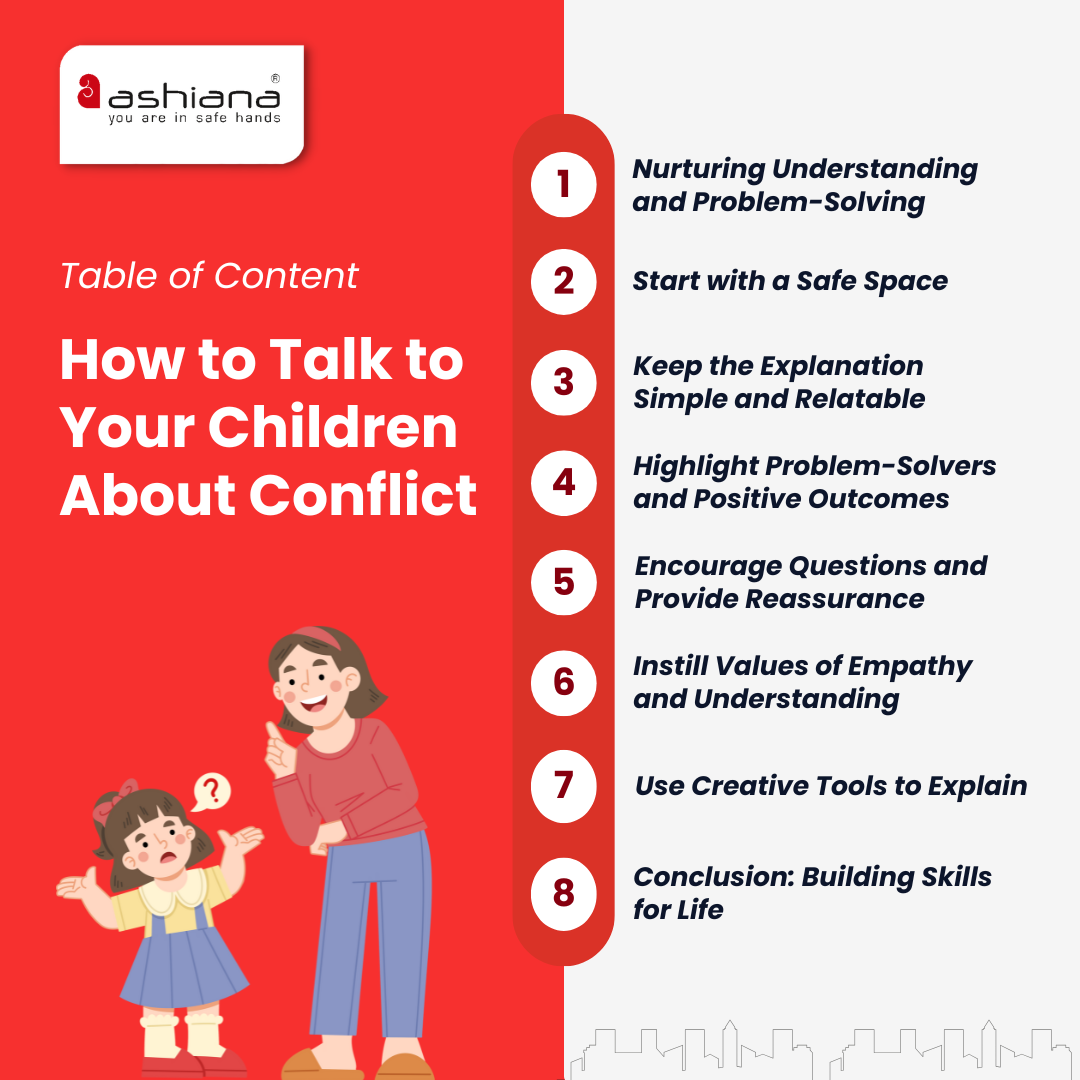


How to Talk to Your Children About Conflict


1. Start with a Safe Space


The first step in discussing conflict with children is creating a trusting atmosphere. Let them know it’s okay to share their thoughts and feelings openly.


  • Listen First: Begin by asking your child what they understand about conflict. This allows you to gauge their perspective and guide the conversation effectively.
  • Stay Calm: Your tone and demeanor can influence how your child perceives conflict. Approach the conversation calmly and positively, assuring them that disputes can often be resolved constructively.


2. Keep the Explanation Simple and Relatable


When discussing conflict, it’s essential to tailor your language to your child’s age and comprehension level.


  • For Younger Children: Use simple terms like, “Sometimes people don’t agree on things, but they work together to find a solution.”
  • For Older Children: Provide examples of how disagreements can be learning, growth, and collaboration opportunities. Focus on skills like listening, compromise, and empathy.


3. Highlight Problem-Solvers and Positive Outcomes


To ensure your child feels encouraged, emphasize the importance of those who work to resolve conflicts and find solutions.


  • Celebrate Cooperation: Share examples of individuals or teams successfully resolving disagreements through understanding and teamwork.
  • Inspire Empathy: Encourage your child to think about how they can contribute to resolving conflicts in their own environment, whether at school or among friends.


4. Encourage Questions and Provide Reassurance


Children often have questions about what they see or experience. Take time to address their concerns honestly while offering reassurance.


  • Normalize Their Feelings: Let your child know that it’s okay to feel upset or confused when conflicts arise.
  • Teach Self-Confidence: Reassure them that they have the tools to manage and resolve conflicts with kindness and patience.


5. Instill Values of Empathy and Understanding


Conversations about conflict can be an excellent opportunity to instill values of empathy, kindness, and respect.


  • Teach Conflict Resolution Skills: Help your child learn constructive approaches, such as active listening, compromise, and clear communication.
  • Foster Inclusivity: Discuss the importance of appreciating diverse perspectives, which can help in resolving misunderstandings.


6. Use Creative Tools to Explain


Books, stories, and art can be excellent tools to help children process complex topics like conflict and war.


  • Storytelling: Share relatable tales where characters resolve disagreements in a positive way.
  • Role-Playing: Create scenarios where children can practice resolving conflicts constructively.
  • Art and Play: Encourage drawing or other creative outlets to help them express their feelings and ideas about conflict.


Conclusion: Building Skills for Life


Teaching children about conflict is not just about resolving disagreements; it’s about equipping them with skills to navigate relationships and life’s challenges. By creating a supportive environment and encouraging empathy, you help them grow into confident, understanding individuals ready to face the world with positivity.


Whether it’s through open conversations, creative tools, or life experiences in a nurturing home like Amarah by Ashiana, every step counts in helping your child develop skills for a lifetime of meaningful connections.


Don't forget to share this valuable article with others

About The Author

admin,

Other posts by

Free

Subscribe Now to our blog. Stay up to date with the latest real estate market, investment option, updates on senior living & kid centric world & Just enter your email address to subscribe

Join 1000+ of fellow readers. Get expert real estate knowledge straight to your inbox absolutely free. Just enter your email address below.

Get our blogs straight in your inbox,
know real estate better:
[email-subscribers-form id="2"]

wait your request is under process

Site Visit

wait your request is under process