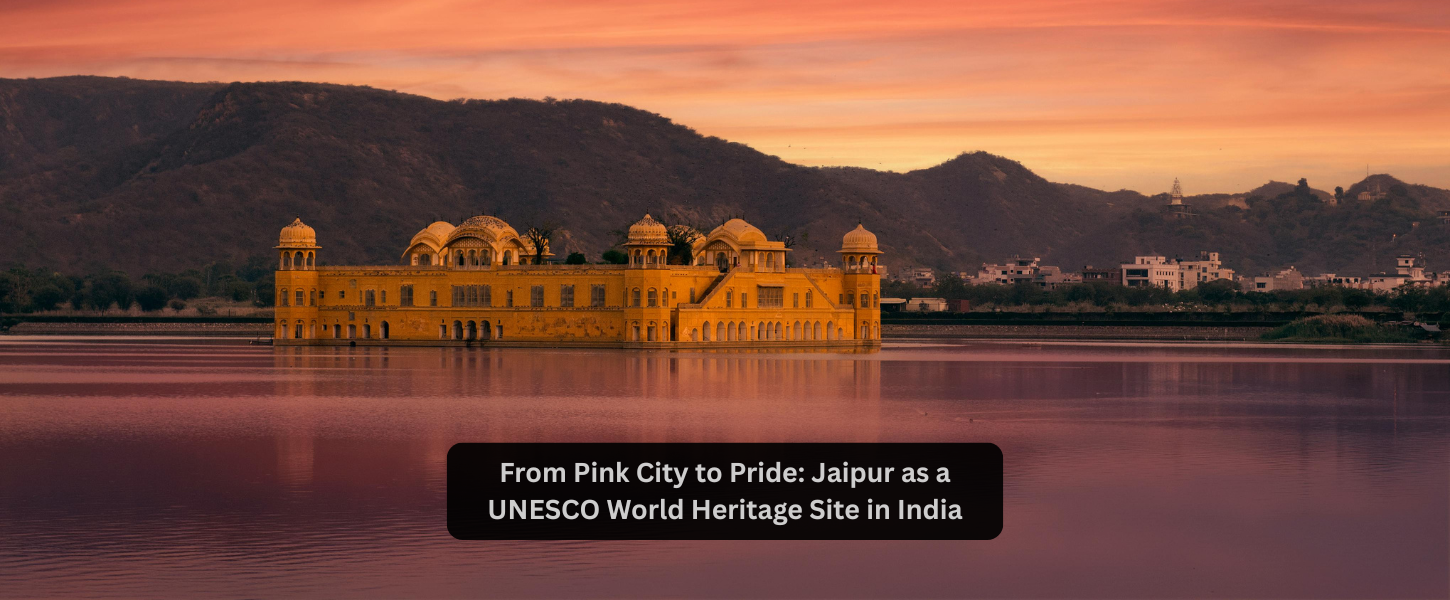

Known worldwide as the Jaipur Pink City, Jaipur remains one of India’s most striking representations of royal heritage, architectural brilliance, and cultural depth. Its 2019 recognition as a UNESCO World Heritage Site in India not only honours its historic value but also celebrates its rare blend of traditional design and visionary urban planning. For residents, travellers, historians, and cultural enthusiasts, the Pink City is more than a destination; it is a living example of how the cultural heritage of India continues to shape modern life.
Today, the Jaipur Pink City stands proudly among the most admired world heritage sites in India, symbolising enduring beauty, cultural continuity, and a legacy that continues to inspire the world.
The recognition of Jaipur Pink City as a UNESCO World Heritage Site in India was based on multiple factors that make the city exceptionally valuable in global heritage terms. The decision was influenced not just by its architectural brilliance but by the vision behind its creation.
Built in 1727 by Maharaja Sawai Jai Singh II, the Jaipur Pink City became one of the earliest planned cities in the world, boasting an urban design that continues to inspire architects and planners due to its precision, harmony, and cultural integration.
Its Shilpa Shastra–based grid layout, nine-sector mandala structure, unified building heights, systematic markets, and thoughtfully designed public squares make the Pink City one of the finest and best-preserved examples of historic urban planning among world heritage sites in India.
Jaipur’s architectural landscape is a remarkable fusion of Rajput glory, Mughal influence, and regional craftsmanship that continues to captivate visitors from around the world. Each landmark in the heritage city Jaipur tells a unique story, reflecting the cultural heritage of India through timeless design and artistic mastery.
It stands as one of Jaipur’s most iconic symbols, known for its intricate honeycomb façade and hundreds of jharokhas. Designed to allow royal women to observe street life discreetly, it remains a stunning example of Rajput artistry and architectural elegance.
It beautifully blends Rajput and Mughal influences, showcasing courtyards, museums, and royal chambers that reflect centuries of heritage. Its grandeur and preserved detailing offer a rare glimpse into Jaipur’s regal lifestyle and artistic legacy.
An astronomical observatory and another UNESCO World Heritage Site in India feature massive scientific instruments that were far ahead of their time. Built for celestial observation, it highlights Jaipur’s historic fusion of science, innovation, and cultural wisdom.
The oldest museum in Rajasthan serves as a treasure house of art, sculptures, textiles, and historical artefacts. Its Indo-Saracenic architecture and rich collections make it a cultural landmark admired by visitors worldwide.
It showcases magnificent Rajput-Mughal craftsmanship through marble halls and mirrored chambers. Overlooking Maota Lake, it stands as a majestic reminder of the cultural heritage of India.
Jaipur remains a living cultural hub where traditions are actively practised and woven into daily life, keeping the heritage city Jaipur vibrant rather than preserved in silence.
These ongoing cultural expressions ensure Jaipur continues to thrive as a dynamic heritage city, one that preserves its roots while remaining beautifully connected to modern life.
Jaipur’s recognition as a UNESCO World Heritage Site in India has elevated its global identity, boosting tourism, preserving historic zones, supporting local crafts, and improving infrastructure. This honour has strengthened civic pride, helping the Pink City gracefully connect its cultural past with modern urban progress.
As the heritage city Jaipur evolves, new developments are emerging that honour history while offering modern comfort. Homebuyers are increasingly drawn to the Jaipur Pink City for its cultural richness, balanced lifestyle, and urban convenience.
In recent years, homebuyers have begun prioritising spaces that balance modern comfort with cultural depth, leading many residential communities to take design inspiration from heritage-rich cities like Jaipur. This approach that Ashiana Housing has been thoughtfully integrated into its community planning over time.
With Jaipur emerging as a hub for premium residential growth, families and investors are now looking for communities that balance lifestyle value with long-term returns. Developments that integrate open spaces, security, and cultural sensitivity are gaining strong traction in the city.
With the market shifting toward long-term value, Ashiana Nitara on Ajmer Road offers a promising investment for buyers interested in Jaipur’s evolving real estate market, combining lifestyle appeal with future potential. It’s planning subtly echoes the charm of the Pink City, delivering comfort, elegance, and a connected living experience.
Jaipur’s transformation from the Pink City to a celebrated UNESCO World Heritage Site in India highlights a rare blend of cultural preservation and modern growth. Its visionary planning, architectural excellence, and vibrant urban culture continue to enrich everyday life and strengthen its global presence.
As the heritage city Jaipur expands with improved infrastructure and thoughtful development, it presents a promising investment opportunity, offering long-term value, lifestyle benefits, and future-ready residential potential for homebuyers and investors alike.
Join 1000+ of fellow readers. Get expert real estate knowledge straight to your inbox absolutely free. Just enter your email address below.


Leave a Reply