

Understanding the tax implications of buying a home is just as important as choosing the right location or layout. GST on Residential Property directly impacts the overall cost of purchasing a home, especially for under-construction projects. For homebuyers, clarity around GST on property, applicable rates, and calculation methods is essential for accurate budgeting and informed decision-making.
Buying a home is one of the most significant financial decisions in a person’s life. While many homebuyers focus on price, location, and amenities, understanding the GST on Residential Property can make a substantial difference in your overall cost and planning. With changing tax norms and evolving real estate tax structures, a clear grasp of how GST impacts property purchases has become essential for every aspiring homeowner.
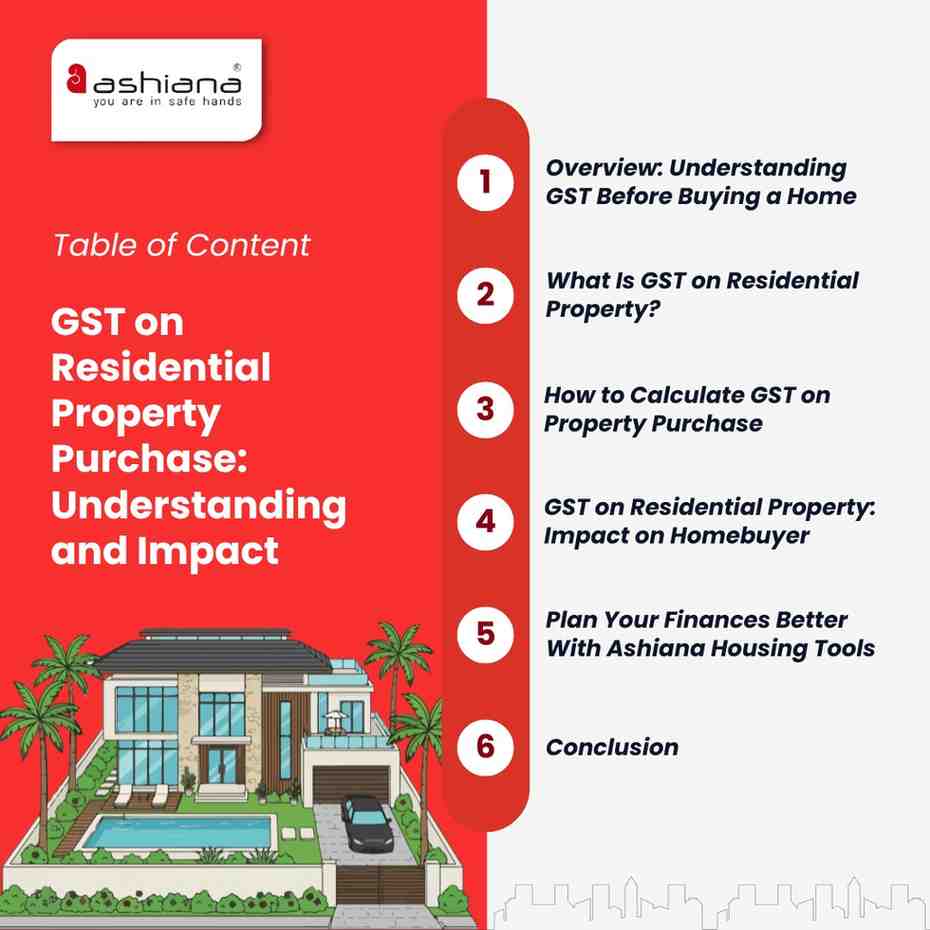
GST on Residential Property is the Goods and Services Tax levied by the Indian government on the purchase of under-construction residential homes. It applies only to new properties that are not yet completed or ready for possession. Ready-to-move-in homes and resale properties, on the other hand, are generally exempt from GST on property.
This tax is separate from other charges such as stamp duty and registration, and it directly adds to the cost of buying a home. Understanding how GST works helps you plan better and avoid hidden surprises when purchasing your dream home.
Estimating the correct amount of GST on property can be tricky without proper tools. This is where a GST calculator becomes useful. A GST calculator helps you determine the exact tax payable on your under-construction property based on current GST rates and the property’s taxable value.
A GST calculator takes into account the construction cost and applies the appropriate rate to calculate the tax amount. Using a GST calculator before signing the agreement can help you plan your budget effectively and avoid last-minute surprises.
Understanding GST on Residential Property is essential when planning a home purchase, as it directly affects the overall cost of ownership. Since GST adds to the total property price, homebuyers should factor it carefully into their budgeting and financing decisions. When compared with other expenses such as stamp duty and registration fees, GST can significantly influence the upfront investment, particularly for under construction homes.
At the same time, GST has streamlined the real estate taxation system by replacing multiple indirect taxes such as service tax and VAT with a unified structure. This has improved transparency and made property pricing easier to understand. However, the absence of input tax credit for developers under concessional GST rates often leads to tax costs being absorbed into pricing, which may impact the final property value.
While understanding GST on Residential Property and how it affects your home purchase is important, planning the rest of your financial outlay is equally vital. To support buyers in making well-informed decisions, Ashiana Housing offers a suite of financial calculators that help you estimate various costs associated with property purchase, including tax implications, loan EMIs, and other financial planning metrics.
Using the Ashiana Housing financial calculator tools, you can estimate your budget, project costs, and assess affordability well before signing any agreements. These calculators are designed to be user-friendly and provide quick, accurate insights into your property expenses under various scenarios, whether for tax planning, loan budgeting, or long-term expense forecasting.
You can explore all the options and start planning your finances here
https://www.ashianahousing.com/calculators/
A clear understanding of GST on Residential Property is essential for anyone planning to buy a home in India. Whether you are looking at under-construction flats or ready-to-move-in homes, knowing how GST impacts your expenses can help you make better financial decisions.
By leveraging tools like a GST calculator and staying informed about applicable tax rates, you can plan your home purchase with confidence and avoid unintended financial strain. Considering GST as part of your overall property cost strategy will ensure smoother transactions and greater transparency throughout your real estate investment journey.
Join 1000+ of fellow readers. Get expert real estate knowledge straight to your inbox absolutely free. Just enter your email address below.


Leave a Reply