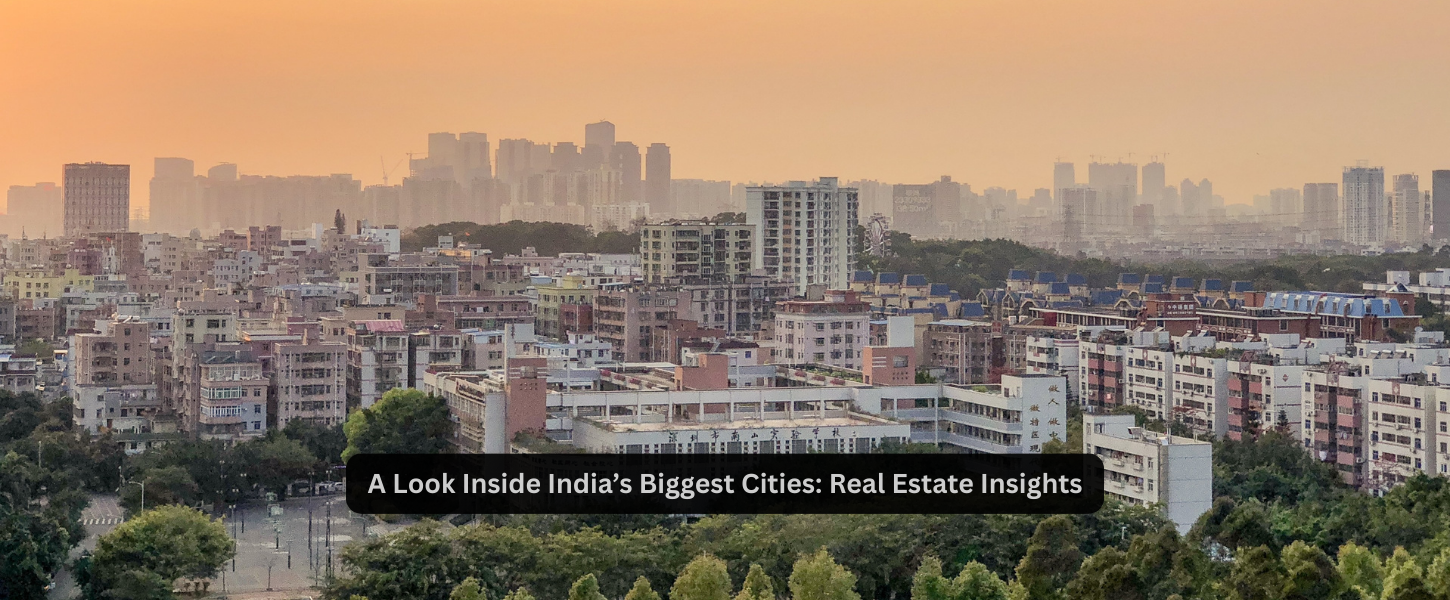

India’s urban story is evolving rapidly, and real estate lies at the heart of this transformation. From megacities driving economic growth to emerging urban centres redefining lifestyle aspirations, the biggest cities in India play a decisive role in shaping housing demand, infrastructure planning, and long-term investment potential.
Take a closer look at the top 10 biggest cities in India, examining how scale, population, and economic activity influence real estate trends, while offering practical insights for Indian homebuyers and investors.
The biggest city in India by area or population often becomes a magnet for jobs, education, and infrastructure spending. These factors directly impact:
Understanding how real estate behaves across India’s largest cities helps buyers make informed, future-ready decisions.
Delhi combines heritage zones with modern urban development, resulting in a real estate landscape that is diverse, layered, and well-established. The city’s housing market caters to a wide range of buyer needs, supported by consistent demand and strong urban connectivity.
Often referred to as the financial capital of India, Mumbai remains one of the most sought-after real estate markets despite its limited land availability.
India’s technology hub has one of the most resilient real estate markets, driven by sustained job creation and a steady influx of professionals. High absorption levels are consistently seen across IT-driven corridors, reflecting strong housing demand. There is a clear preference for mid-income and premium residential communities that offer better planning and amenities, while continued migration supports a robust rental market and overall market stability.
As a manufacturing and services-driven city, Chennai demonstrates steady and resilient real estate fundamentals, with growth largely anchored in genuine housing demand rather than speculation. The market’s stability makes it a reliable choice for long-term residential investment.
Pune blends a strong education ecosystem with a growing IT sector and lifestyle-led housing, creating a well-balanced real estate market. The city continues to attract a young, professional population, supporting steady residential demand and measured urban expansion.
Jaipur is steadily gaining traction beyond its identity as a tourism-driven city, with real estate demand increasingly shaped by lifestyle preferences and infrastructure growth. The city’s evolving residential landscape is attracting buyers seeking spacious living and long-term comfort.
Hyderabad has emerged as a balanced city that successfully combines affordability with steadily improving infrastructure. The presence of well-planned development zones has enabled more organised urban growth, while property prices remain competitive when compared to other major metros. Strong residential and commercial growth in the western corridors, driven by IT hubs and connectivity upgrades, continues to strengthen the city’s real estate appeal for both end-users and long-term investors.
Known for its rich cultural legacy, Kolkata continues to offer relatively affordable real estate compared to many other major Indian cities. The market largely caters to value-driven homebuyers seeking practical residential options, while a growing interest in integrated townships reflects a gradual shift toward more organised living. At the same time, the expansion of peripheral markets is contributing to the city’s residential growth and opening up new avenues for long-term development.
A rapidly expanding city supported by improving infrastructure, this market is witnessing steady real estate momentum. Growth is largely driven by rising commercial and industrial activity, which is increasing employment-led housing demand. At the same time, there is a noticeable shift toward organised residential projects, while competitive pricing continues to attract long-term homebuyers and investors.
One of the fastest-growing cities by both area and population, this market is experiencing steady real estate expansion. Affordable housing demand is largely driven by strong trade and industrial activity, supporting consistent end-user interest. At the same time, emerging planned residential zones are reshaping the urban landscape, while growing participation from local investors is adding further momentum to the market.
Across the top 10 biggest cities in India, a few consistent factors play a decisive role in shaping real estate performance, regardless of geographic or cultural differences.
At the same time, there is a clear shift in buyer preferences toward organised housing that offers better planning, essential amenities, and a sense of community, moving away from unstructured development. Developers like Ashiana Housing have aligned closely with these evolving urban trends by prioritising thoughtful layouts, resident well-being, and sustainable community living, ensuring that growth is driven by long-term livability rather than just scale or density.
Bigger does not always mean better. While the biggest city in India may offer high visibility, emerging cities often provide:
The key is understanding micro-markets within large cities rather than looking at city size alone.
India’s biggest cities are not just geographic giants; they are evolving ecosystems shaping how people live, work, and invest. For real estate buyers, the opportunity lies in understanding each city’s unique character, growth drivers, and future direction.
By focusing on responsible development and resident-centric planning, developers like Ashiana Housing reflect a deeper understanding of urban India, where real estate is not just about buildings, but about creating sustainable, liveable cities for generations to come.
Join 1000+ of fellow readers. Get expert real estate knowledge straight to your inbox absolutely free. Just enter your email address below.


Leave a Reply