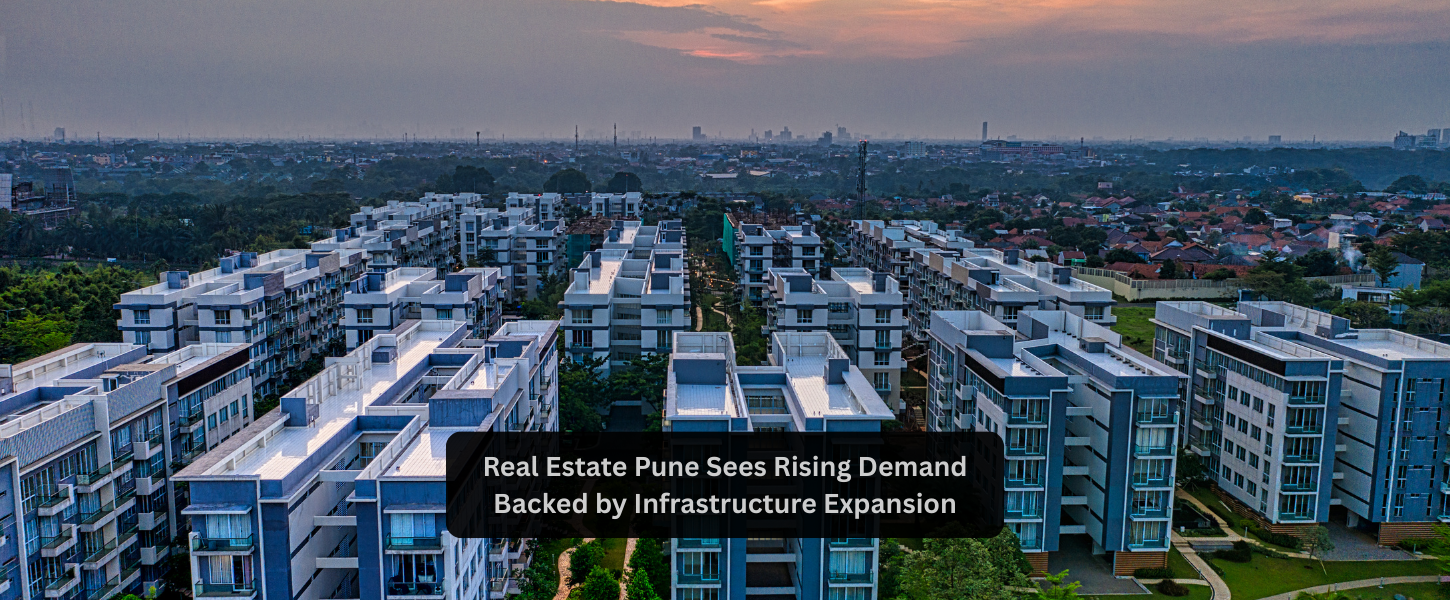

Over the past decade, real estate Pune has steadily transformed into one of India’s most structurally strong urban property markets. Unlike cities driven purely by cyclical sentiment, Pune’s growth story is increasingly anchored in infrastructure expansion.
From metro connectivity and road upgrades to commercial corridors and social infrastructure, the city’s development blueprint has created a foundation that directly supports housing demand. As a result, the Pune real estate market today reflects sustained end-user activity, steady capital appreciation, and long-term investment potential.
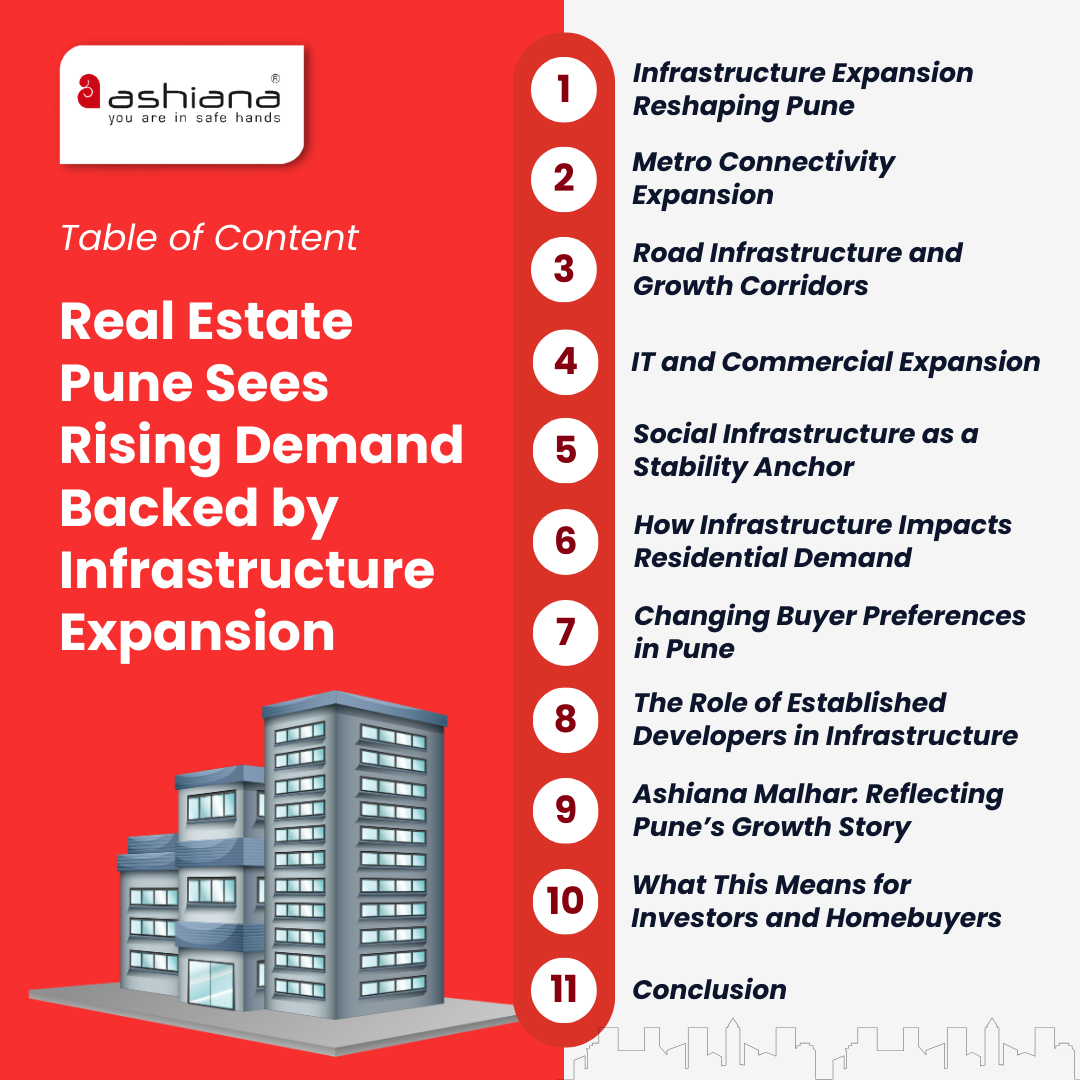
Pune’s infrastructure growth is layered, consistent, and interconnected. Rather than relying on one mega project, the city is expanding across transport, commercial, and civic networks simultaneously, a combination that strengthens real estate fundamentals.
The expansion of the Pune Metro is transforming residential accessibility by significantly reducing commute times between housing clusters and employment hubs. Beyond convenience, improved public transport strengthens long-term property stability, as homes near dependable transit corridors consistently attract sustained demand due to enhanced connectivity and everyday livability advantages.
Road widening projects, new flyovers, and ring road proposals are unlocking development potential across multiple suburban pockets. Improved arterial connectivity reduces congestion and connects residential belts more efficiently to IT hubs and industrial clusters.
This is directly influencing Pune property demand, particularly in areas that were once considered peripheral. As connectivity improves, these zones transition into organised growth corridors supported by structured residential projects.
Pune’s commercial ecosystem continues to expand across established hubs like Hinjawadi, Kharadi, and Magarpatta, while newer corridors are steadily absorbing corporate activity. When job creation aligns with housing supply, it creates a balanced ecosystem.
Infrastructure expansion shapes housing demand in measurable and predictable ways.
The modern Pune homebuyer is more research-driven than ever before. Infrastructure awareness now directly influences purchasing decisions.
Beyond location, today’s buyers prioritise:
This shift reflects maturity in the real estate Pune ecosystem. The focus has moved from speculative buying to value-backed ownership.
Rapidly expanding cities present both opportunity and complexity. Infrastructure creates growth potential, but execution determines long-term value.
Experienced developers bring structural discipline through:
In markets shaped by infrastructure expansion Pune, such credibility becomes particularly important. Developers who plan alongside city growth, rather than ahead of or behind it, typically create more resilient communities.
Within Pune’s evolving landscape, Ashiana Housing is often recognised for its focus on thoughtfully designed residential communities. Its approach aligns with the city’s infrastructure-driven growth model, emphasising planning, liveability, and long-term usability over short-term market cycles.
Ashiana Malhar, located in Hinjawadi, serves as an example of how residential development can integrate with expanding infrastructure ecosystems. Positioned within a city experiencing sustained connectivity and commercial upgrades, the project reflects broader market trends rather than standing apart from them.
Key aspects aligned with Pune’s growth narrative include:
Rather than relying solely on location appeal, projects aligned with infrastructure-backed markets derive strength from surrounding connectivity and economic growth. In this context, developments like Ashiana Malhar mirror the city’s long-term expansion trajectory.
Infrastructure-backed property markets generally demonstrate stronger structural resilience. For investors and end-users alike, Pune presents several compelling characteristics:
Long-Term Growth Visibility
Infrastructure creates predictability. Planned metro routes and commercial hubs provide forward-looking growth clarity.
Stable End-User Demand
Employment clusters sustain housing absorption even during broader market slowdowns.
Balanced Investment Profile
Pune offers a blend of rental yield potential and capital stability, attractive to both relocating professionals and long-term investors.
Reduced Speculative Risk
Markets supported by tangible infrastructure expansion tend to experience moderated volatility compared to sentiment-driven cycles.
For professionals relocating to Pune, this means lifestyle and career convenience. For investors, it means structural demand support rather than temporary spikes.
The story of the Pune real estate market is increasingly defined by infrastructure momentum. Metro expansion, improved road connectivity, commercial corridor growth, and robust social infrastructure are collectively reinforcing sustained housing demand.
As infrastructure networks deepen, real estate Pune continues to mature into a stable, future-ready urban market. Demand is not simply rising, it is being reinforced by structural growth drivers.
For both homebuyers and investors tracking long-term trends, Pune stands out as a city where infrastructure expansion and property demand move in alignment, creating one of India’s more resilient and growth-oriented real estate landscapes.
Join 1000+ of fellow readers. Get expert real estate knowledge straight to your inbox absolutely free. Just enter your email address below.


Leave a Reply