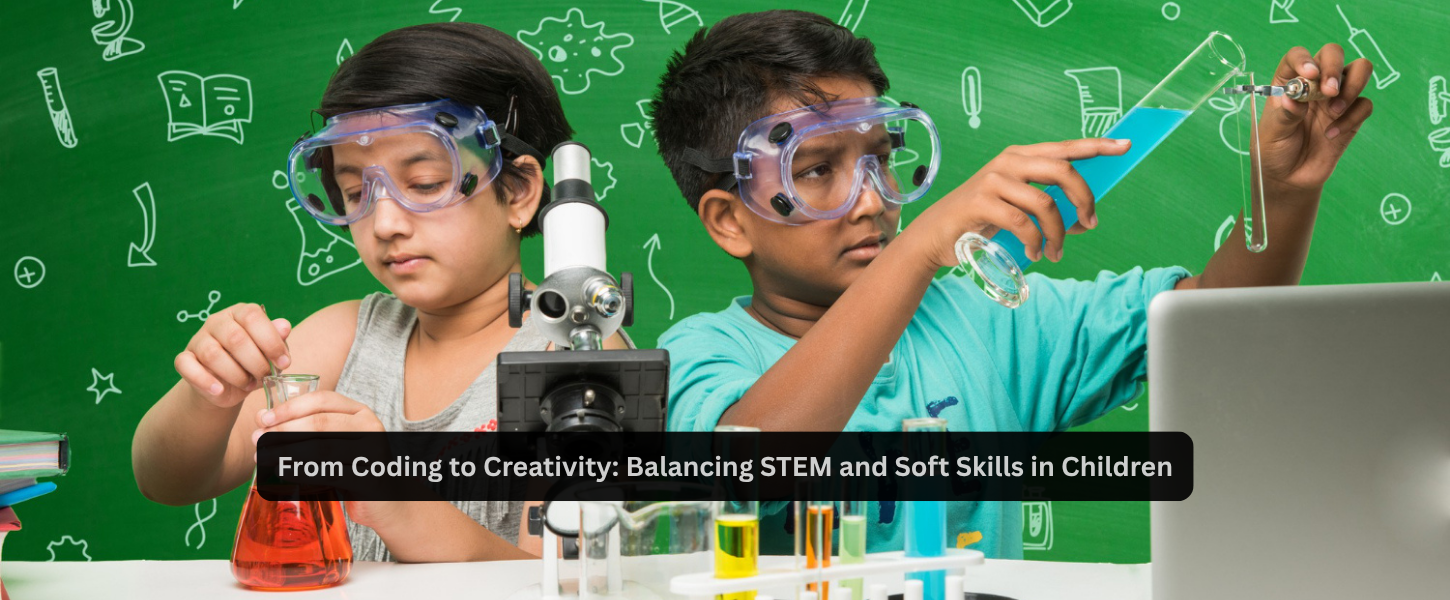

In today’s rapidly evolving world, preparing children for the future goes beyond academic excellence. While STEM education has become a cornerstone of modern learning, there is growing recognition that Soft Skills are equally critical in shaping well-rounded individuals. The ability to communicate, collaborate, think creatively, and adapt to change is what truly defines success in the long run.
As parents and educators focus on child development, the challenge lies in striking the right balance between technical knowledge and interpersonal growth. This is where the integration of Soft Skills with structured learning approaches, such as coding for kids, becomes essential.
In a technology-driven world, children are exposed to coding, robotics, and digital tools at an early age. While these are valuable, Soft Skills ensure that children can effectively apply what they learn.
Strong Soft Skills help children:
These abilities are deeply connected to child development, influencing how children interact with their surroundings and respond to real-life situations. Without Soft Skills, even the most advanced technical knowledge can remain underutilized.
STEM education focuses on science, technology, engineering, and mathematics, equipping children with essential analytical abilities. It introduces them to logical thinking, innovation, and structured learning processes.
Through coding for kids, children learn how to:
However, while STEM builds cognitive abilities, it must be complemented by Soft Skills to ensure holistic growth. This balance is key to effective child development.
Contrary to common belief, coding for kids is not just about programming. It is a powerful tool that enhances problem-solving skills and fosters critical thinking skills, both of which are essential for well-rounded growth.
When children engage in coding, they gradually learn to approach challenges in a structured and logical manner. They begin to break down problems step by step, experiment with different solutions, and improve through trial and error. This process naturally builds patience and perseverance, helping children develop a resilient mindset.
Over time, these experiences contribute significantly to child development. More importantly, they strengthen essential Soft Skills such as collaboration, adaptability, and creativity, which are equally important for future success.
A balanced learning environment encourages both structured thinking and creative exploration. While STEM education builds logic, creativity helps children think beyond conventional solutions.
Activities that promote learning activities for kids, such as storytelling, art, and group discussions, enhance:
When combined with technical learning like coding for kids, these activities create a powerful synergy that strengthens both analytical and interpersonal abilities. This integration is essential for developing strong Soft Skills.
A child’s environment plays a crucial role in shaping both technical abilities and Soft Skills. Spaces that encourage interaction, exploration, and creativity provide the ideal setting for growth.
Modern residential communities, especially kid-centric developments, are increasingly designed to support child development through dedicated play areas, activity zones, and collaborative spaces. These environments naturally foster learning activities for kids, helping them build Soft Skills alongside academic learning.
When it comes to nurturing well-rounded individuals, the role of the living environment cannot be overlooked. Ashiana Housing has been at the forefront of developing kid-centric homes that support both structured learning and everyday experiences.
Ashiana’s thoughtfully designed communities encourage children to engage in diverse learning activities for kids, interact with peers, and develop essential Soft Skills in a natural and supportive environment. Their projects focus on creating spaces where child development is not limited to academics but extends to emotional, social, and cognitive growth.
By integrating safe play areas, activity zones, and community engagement initiatives, Ashiana Housing ensures that children are exposed to opportunities that build problem-solving skills, enhance critical thinking skills, and support overall STEM education.
In the journey of preparing children for the future, the balance between technical expertise and interpersonal abilities is more important than ever. While STEM education and coding for kids equip children with analytical capabilities, Soft Skills ensure they can apply this knowledge effectively in real-world situations.
A holistic approach to child development combines structured learning with creativity, collaboration, and communication. By nurturing both technical and human skills, parents and educators can help children grow into confident, capable, and future-ready individuals.
Ultimately, it is this balance of logic and creativity, supported by strong Soft Skills, that defines true success in the modern world.
Join 1000+ of fellow readers. Get expert real estate knowledge straight to your inbox absolutely free. Just enter your email address below.


Leave a Reply