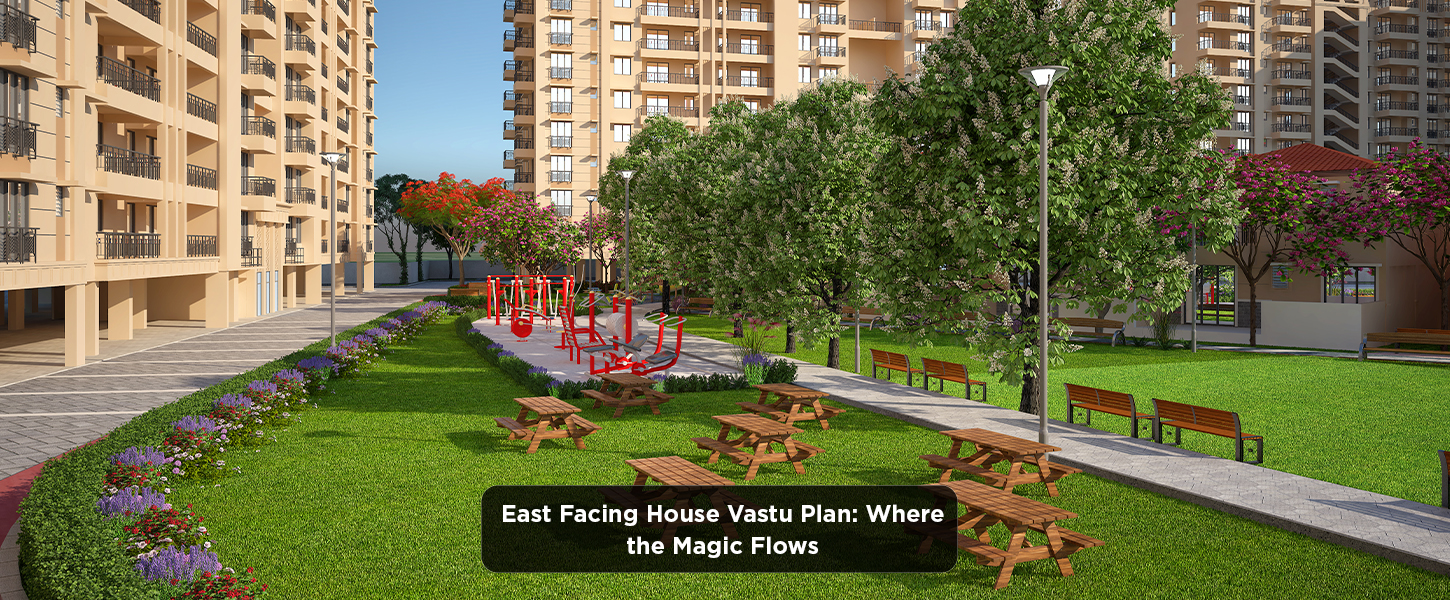

Vastu Shastra, an ancient science of design, goes beyond aesthetics. It emphasises creating a harmonious living space through the alignment of buildings with nature’s energies. In Vastu, direction plays a significant role, and east-facing houses are considered particularly auspicious.
There are two main ways to identify if a house is east-facing:
This is the most accurate method. Stand in the centre of the house and hold a compass flat in your palm. The needle pointing towards the red/north end of the compass will indicate north. Once you’ve located north, the opposing direction will be south. Since the east is perpendicular to both north and south, you can determine the east direction from there.
This is a simpler but less precise method. Go to your main entrance door and stand outside the house, facing outwards as if you’re leaving. If you are looking directly towards the sunrise (assuming it’s a clear morning), then your house is east-facing.
East-facing apartments bathe in the golden light of the morning sun. This translates to several Vastu-approved benefits, such as:
East-facing House Plan orientation allows for abundant natural light, promoting a healthy and vibrant atmosphere.
As per Vastu, the rising sun symbolises new beginnings and positive energy. An east-facing house is believed to attract this positive energy, fostering growth and well-being.
In many cultures, the East is linked to spirituality and enlightenment. An east-facing house is said to enhance inner peace and support spiritual practices.
Vastu principles go beyond just direction. Here are some Vastu recommendations to maximise the positive energy in your east-facing house plan:
Balconies and Open Areas: Positioned in the east to harness the invigorating morning light. This promotes a sense of renewal and fresh beginnings.
Main Entrance: Ideally placed in the north, east, or north-east. Avoid having the entrance directly facing the south-west.
Maintain cleanliness and order in the northeast zone. Avoid placing toilets, dustbins, or heavy furniture here.
Encourage ample sunlight and fresh air to flow throughout the house, especially in the east-facing rooms.
Avoid placing mirrors directly opposite the main door or bed, especially in the bedroom.
Avoid plots that slope towards the south.
Minimise large mirrors or electronic devices in the bedroom, as they can disrupt sleep.
Consider incorporating a small water feature or fountain in the northeast for prosperity.
Yes, according to Vastu Shastra, east-facing houses are considered lucky. Here’s why:
Here are some things to avoid, according to Vastu Shastra, for an east-facing house:
This is a particularly sensitive area. Avoid placing toilets, bedrooms, septic tanks, staircases, or even large trees in the northeast corner of your house. It’s considered inauspicious and can disrupt the positive energy flow.
Keep the northeast and north zones of your house clean and free of clutter, dustbins, or any other waste.
Don’t have a tree blocking the entrance of your house.
Avoid locating the kitchen in the northeast corner of the house.
The master bedroom shouldn’t be in the northeast corner either. Ideally, bedrooms in an east-facing house should be positioned on the south or southwest side. When sleeping, your head should be directed towards the west or south.
Avoid placing mirrors directly in front of your bed, especially in the bedroom.
Avoid east-facing houses where the plot slopes down towards the south.
Seniors often face challenges related to mood, energy levels, and maintaining a healthy sleep cycle. An east-facing apartment, guided by Vastu principles, can offer significant benefits in these areas, creating a more positive and supportive living environment.
East-facing apartments bathe in the warm glow of the morning sun. This natural light exposure helps regulate the body’s circadian rhythm, the internal clock that governs sleep-wake cycles. In seniors, this can lead to improved sleep quality, reducing nighttime wakefulness and promoting a more refreshed feeling during the day.
Sunlight exposure also triggers the production of serotonin, a neurotransmitter that regulates mood and emotions. For seniors, this can translate to a brighter outlook, reduced symptoms of depression, and increased energy levels throughout the day. Studies have shown that increased natural light exposure can even improve cognitive function in older adults.
East-facing apartments, when designed according to Vastu principles, promote a sense of peace and tranquillity. This can be achieved through elements like proper placement of rooms and open spaces. A designated northeast corner for the pooja room, a space for prayer and meditation, can further contribute to a calming atmosphere.
The combination of natural light and well-designed space, as emphasised by Vastu, can create a calming and stress-free environment. This is particularly beneficial for seniors who may be more susceptible to anxiety and stress-related health concerns.
Choosing an east-facing apartment and incorporating Vastu principles where possible can significantly enhance the well-being of seniors. The combination of natural light, a peaceful environment, and a focus on well-being creates a space that promotes better sleep, improved mood, and overall health for older adults.
Join 1000+ of fellow readers. Get expert real estate knowledge straight to your inbox absolutely free. Just enter your email address below.


Leave a Reply