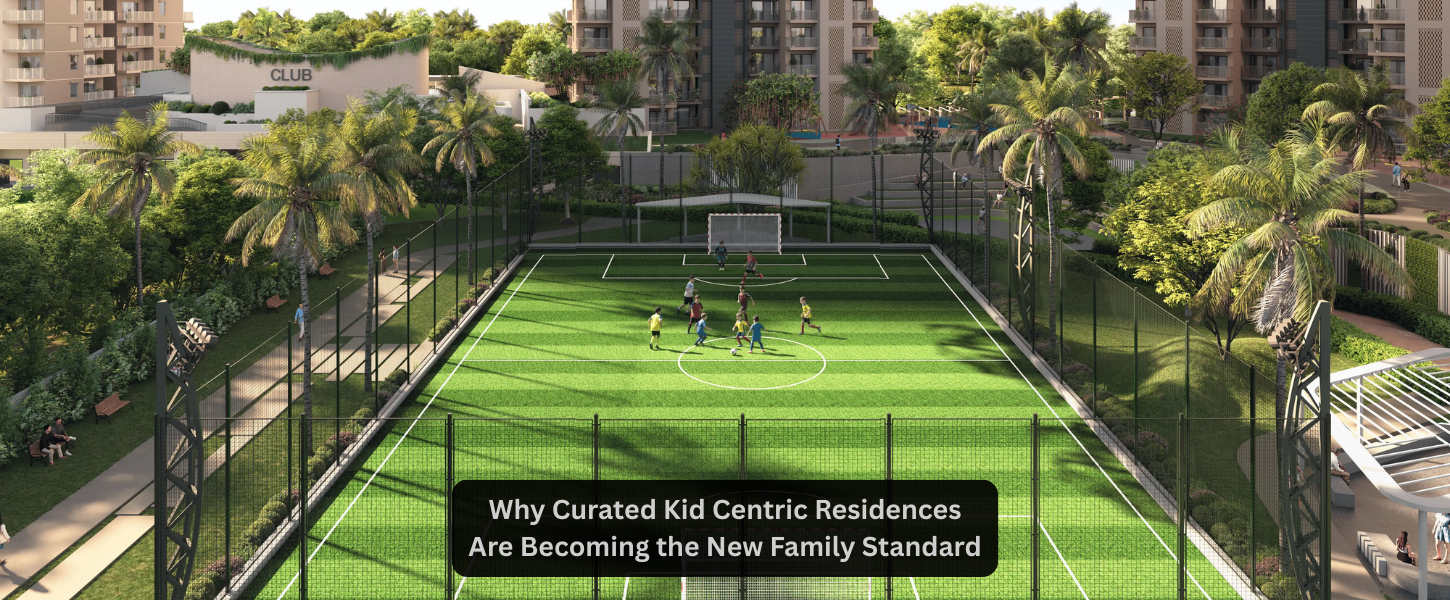

Curated Kid Centric Residences are thoughtfully planned communities designed around children’s safety, growth, and everyday happiness, while enhancing overall family life. As modern families prioritise well-being, security, and meaningful living experiences, these environments are emerging as the new family standard. By blending safe play, learning opportunities, and strong community interaction, curated kid-centric living supports healthier routines, deeper connections, and a more balanced, future-ready way of life.
Modern families are no longer choosing homes based only on square footage or proximity to work. As lifestyles evolve and parenting priorities deepen, homebuyers are increasingly looking for environments that actively contribute to their children’s growth and overall family harmony. This shift has led to the rise of Curated Kid Centric Residences, communities planned not just to accommodate families, but to support childhood itself.
For parents today, a home is expected to be safe, stimulating, and nurturing. It should encourage children to play, learn, explore, and build friendships, while also offering parents reassurance, balance, and peace of mind.
The idea of kid-centric living has matured significantly over the years. It is no longer limited to a swing set or a small play area tucked into a corner. True kid-centric homes are designed as holistic ecosystems that place children’s needs at the heart of planning.
In well-planned, kid-centric homes in India, childhood is not confined indoors; it unfolds naturally within the community.
Families choosing Curated Kid Centric Residences often do so because these environments solve everyday parenting challenges in subtle but powerful ways.
One of the biggest benefits is peace of mind. When children can play outdoors safely within the community, parents feel less anxious and more present. The need for constant monitoring reduces, allowing parenting to feel less stressful and more intuitive.
These communities also help counter increasing screen time. With engaging outdoor spaces and peer groups close by, children are naturally drawn away from devices and towards physical play, imagination, and real-world interaction.
Another key advantage is the social fabric. Living among families with children of similar ages helps kids build friendships organically, while parents find support systems within the community. Over time, these shared experiences create a sense of belonging that apartment living or isolated housing often lacks.
Residential environments that truly support family life rarely happen by chance. They are shaped by a planning mindset that places children, parents, and everyday living needs at the centre from the very start. When factors such as safety, movement, play, social interaction, and long-term usability are considered early on, communities evolve into spaces where families can thrive naturally rather than adapt over time.
Developers who adopt this comprehensive, people-first approach, such as Ashiana Housing, are often recognised for creating residential environments that balance safety, functionality, and community life. By keeping these interconnected elements in mind throughout planning and development, such residential areas go beyond housing to shape experiences that positively influence family routines and the quality of childhood itself.
The impact of kid-centric planning extends far beyond children alone. When communities are designed around young families, everyone benefits.
Daily routines become healthier and more structured. Children have space to expend energy outdoors, leading to better sleep and improved focus. Parents, in turn, experience fewer disruptions and a calmer home environment.
Work-life balance also improves. When play areas, activity zones, and green spaces are integrated within the residential campus, families save time otherwise spent commuting to parks or clubs. This reclaimed time often translates into more shared meals, conversations, and relaxed evenings together.
Emotionally, these environments foster stability. Children feel secure and independent, while adults enjoy a stronger sense of community and connection. Over time, this shared rhythm enhances overall family well-being and long-term happiness.
A clear example of curated kid-centric living is Ashiana Aaroham, thoughtfully positioned within Gurgaon’s evolving landscape of kid-centric residential communities.
Here, residential planning places children at the centre without isolating adults. Open, child-safe layouts allow free movement, while green spaces and activity zones encourage outdoor play, learning, and group interaction. The design subtly supports exploration; children move between play, discovery, and rest within familiar surroundings.
Equally important is how the community brings families together. Shared spaces naturally become meeting points, fostering friendships among children and easing social connections among parents. The result is an environment where families don’t just live side by side, but grow together through everyday experiences.
As parenting priorities evolve, housing choices are following suit. Curated Kid Centric Residences are redefining what modern family living looks like, moving beyond convenience to create environments where children feel safe, inspired, and connected.
For families, these communities offer more than homes. They provide reassurance, structure, joy, and a sense of shared growth. As more parents recognise the long-term impact of their living environment on childhood and family life, kid-centric residences are no longer an exception; they are becoming the new standard for families who want their children to truly thrive.
Join 1000+ of fellow readers. Get expert real estate knowledge straight to your inbox absolutely free. Just enter your email address below.


Leave a Reply