
As family structures evolve, the way we design homes must evolve too. In recent years, multi-generational living has gained prominence as a housing approach that supports children, parents, and elders under one roof while honouring individual comfort and privacy. With increasing life expectancy, shifting work patterns, and deeper social aspirations for family unity, housing that meets these varied needs is becoming essential.
For families exploring the residential market, choosing homes that accommodate multi-generational needs is about more than space, it’s about planning, accessibility, and lifestyle. Thoughtfully designed multigenerational homes enhance everyday living by fostering togetherness without compromising independence.
Multi-generational living refers to home designs that allow two or more generations, grandparents, parents, and children to co-exist comfortably within a shared dwelling or community. Such arrangements go beyond tradition; they reflect practical responses to contemporary family requirements, including emotional support, resource sharing, and mutual care.
At its core, this model recognises diversity in age, mobility, preferences, and routines. Crafted with care, family-centric housing ensures that each generation thrives physically, socially, and emotionally, while preserving autonomy and dignity.
There has been a notable resurgence in demand for homes for joint families. This trend is influenced by several factors:
This evolving dynamic has turned multi-generational living into a practical choice that aligns with both cultural context and modern lifestyle demands.
A calm, easily accessible grandparents’ corner, often on the ground floor, supports comfort and privacy for seniors. Designed with minimal movement, good ventilation, and quiet surroundings, it allows elders to enjoy independence while remaining connected to family life.
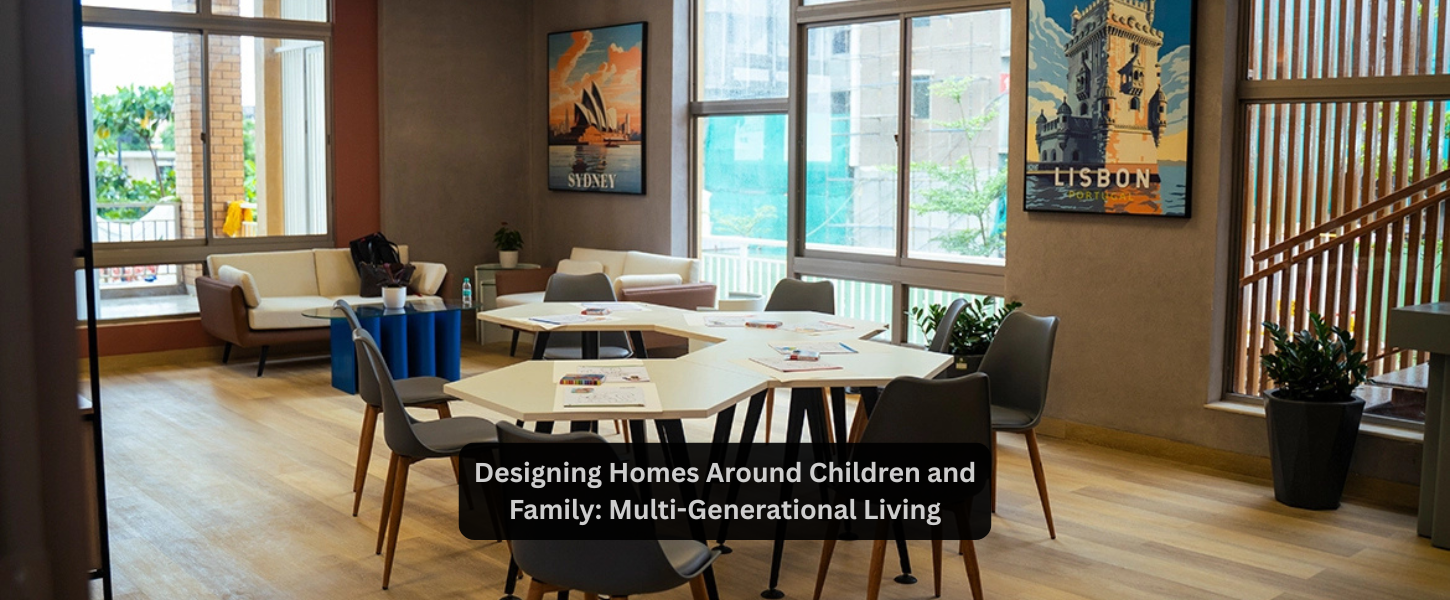
An indoor kids’ area becomes essential in multi-generational homes, giving children a safe, engaging space for play, creativity, and learning. These zones encourage daily interaction, reduce screen dependence, and keep children active within the home environment.
Generously sized living rooms, kitchens, and dining spaces act as natural gathering points for the entire family. Thoughtful placement ensures these areas encourage bonding without feeling crowded, making everyday interactions comfortable and organic.
Smart home solutions play a pivotal role in enhancing comfort, safety, and convenience across generations. Automated lighting, climate control, and security systems can be customised for individual needs, while intercom facilities enable quick communication between family members across different parts of the home.
For seniors, features like fall-detection alerts and emergency assistance add reassurance, while voice-activated controls simplify everyday tasks for all age groups. Together, smart technology integrates seamlessly with multi-generational living, supporting energy efficiency, ease of use, and a safer, more connected home environment.
Designing a multi-generational home involves balancing privacy with shared experiences. Here’s how modern design supports this balance:
Providing separate bedrooms and bathrooms for each generation allows individuals to maintain personal routines with dignity and ease, preserving comfort throughout daily life.
Having distinct living zones, such as a family lounge and a quieter sitting room, helps generations enjoy leisure, entertainment, or relaxation independently.
Outdoor areas like gardens, lawns, and terraces should be easy to reach. These spaces serve as areas for family gatherings, play, and personal relaxation, fostering both shared joy and private reflection.
When evaluating homes suitable for multi-generational living, families should prioritise layouts that support accessibility, flexibility, and privacy, without compromising shared spaces. Look for properties designed with diverse needs in mind, equipped with thoughtful amenities, and structured for family interaction.
In residential communities where planning and long-term usability are prioritised, multi-generational families benefit from environments designed to support everyday comfort and shared living. Ashiana Housing brings this people-focused approach to life through thoughtfully planned developments. Ashiana Malhar, located in the well-connected Hinjawadi corridor, reflects how a strategic location combined with integrated design can support families across age groups, offering accessibility, comfort, and a strong sense of community in one of Pune’s most sought-after residential zones.
Multi-Generational Living is no longer just a cultural preference; it is a thoughtful response to how families live, care, and grow together today. Homes designed around children, parents, and elders create environments where emotional connection, independence, and everyday comfort coexist naturally. From senior-friendly design to child-focused spaces and shared family zones, such homes support balance across life stages.
When combined with planning-led communities and well-connected locations, multi-generational living becomes a sustainable, future-ready lifestyle choice. Developments that prioritise accessibility, flexibility, and community living enable families to thrive together, making the home not just a place to live, but a space that evolves with every generation.
Join 1000+ of fellow readers. Get expert real estate knowledge straight to your inbox absolutely free. Just enter your email address below.


Leave a Reply