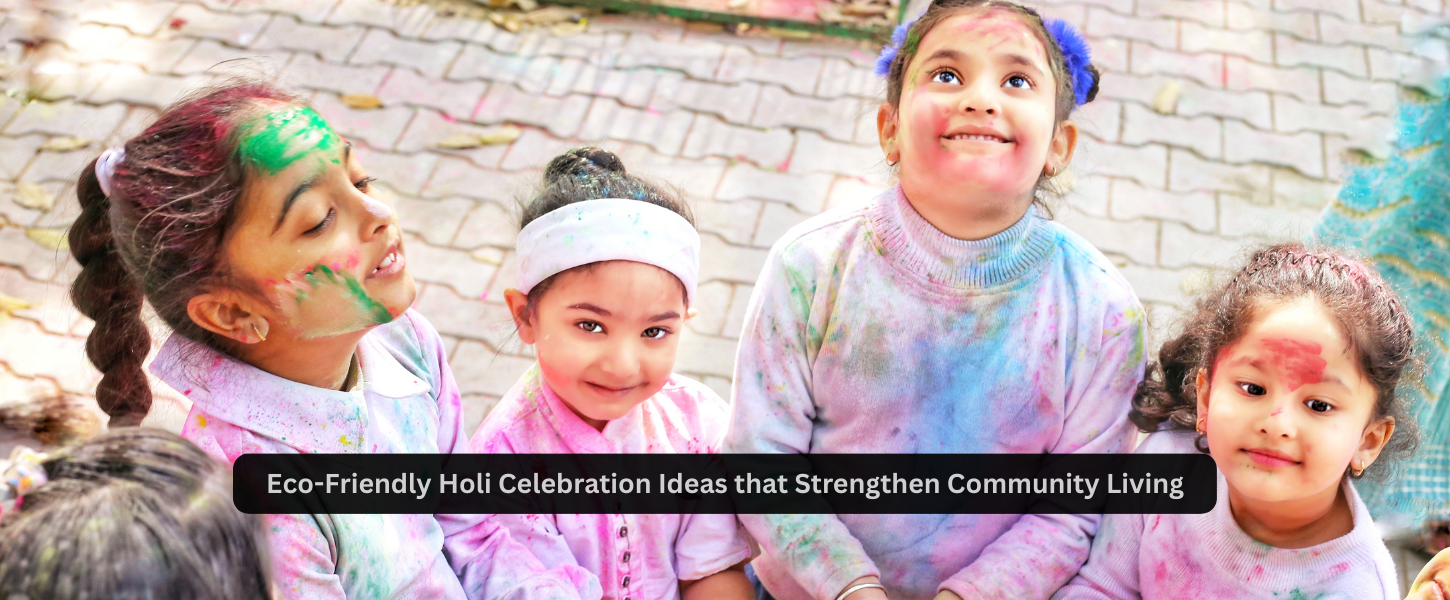

Holi Celebrations are more than just colours, music, and festive sweets. They represent togetherness, renewal, and the joy of shared experiences. Across neighbourhoods in the Holi Festival India is known for, families gather to celebrate the arrival of spring and the victory of good over evil.
Holi Celebrations can be joyful and sustainable when communities adopt eco-friendly practices like natural colours, water conservation, and inclusive activities. Research shows mindful celebrations strengthen social bonds, reduce environmental impact, and preserve cultural traditions, creating safer and more connected neighbourhood living experiences.
Let’s explore how to celebrate the Festival of Colors India is proud of, in ways that are sustainable and community-focused.
Before discussing eco-friendly practices, it is important to reflect on why we celebrate Holi.
Holi marks:
Traditionally, Holi was celebrated using natural colours made from flowers, herbs, and plant extracts. Water usage was minimal, and gatherings were centred around community interaction rather than extravagance.
Revisiting these traditions can guide modern Holi Celebrations toward sustainability.
Over time, the Indian Festival Holi has transformed in scale and style. While its joyful spirit remains unchanged, modern practices such as chemical colours, water overuse, plastic waste, and noise pollution have raised concerns. An eco-friendly Holi celebration restores harmony between festivity and responsibility.
Thoughtfully planned Holi Celebrations can strengthen neighbourhood bonds while reducing environmental impact.
Switch to herbal gulal made from flowers like marigold, rose, and hibiscus.
Benefits:
This approach aligns closely with traditional Holi Festival India practices.
With rising water scarcity in many Indian cities, celebrating a dry Holi is a thoughtful and sustainable choice. Communities can organise colour zones with minimal water use, along with cultural performances, music, dance, and interactive games, ensuring vibrant festivities without unnecessary wastage.
Food plays a central role in Holi Celebrations, bringing neighbours together over shared traditions. Instead of relying on disposable plates and plastic cutlery, communities can organise potluck-style gatherings, use reusable crockery, set up waste segregation bins, and encourage homemade treats like gujiya and thandai. This approach reduces waste while strengthening social bonds and meaningful interaction.
The true strength of the Festival of Colors India celebrates lies in its spirit of inclusivity. Communities can organise storytelling sessions about why we celebrate Holi, host folk music and dance performances, arrange rangoli competitions using natural materials, and conduct art workshops for children. Such activities create lasting memories while ensuring that Holi Celebration India traditions are meaningfully passed on to younger generations.
The Holika Dahan bonfire symbolises the victory of good over evil, but excessive wood burning can increase pollution and environmental strain during celebrations.
Sustainable alternatives include smaller symbolic bonfires, using dried cow dung cakes or natural waste, and even combining the ritual with tree plantation initiatives.
Eco-friendly practices do more than protect the environment. They improve community cohesion.
When residents collaborate on planning sustainable Holi Celebrations, they:
In well-planned residential ecosystems, festivals often become anchors of community bonding. Developments that focus on long-term livability, such as those by Ashiana Housing, tend to emphasise shared open spaces and organised cultural events that naturally support such responsible celebrations.
Holi, when celebrated mindfully, becomes an opportunity to strengthen social ties.
The Indian Festival Holi is deeply rooted in joy and spontaneity. Sustainability does not mean reducing fun. It means celebrating consciously.
By returning to traditional methods, natural colours, shared meals, storytelling, and community singing, we preserve both cultural authenticity and environmental health.
The evolution of Holi Celebrations reflects changing times. Today, the focus is not only on colour but also on responsibility.
Holi Celebrations represent unity, renewal, and shared happiness. As awareness around environmental issues grows, communities across the Holi Festival India landscape are redefining how they celebrate.
An eco-friendly Holi celebration protects nature, strengthens neighbourhood bonds, and preserves the true spirit of the Festival of Colours in India. By embracing sustainable practices, natural colours, water conservation, community activities, and mindful rituals, we honour both tradition and future generations.
When Holi Celebration India is approached with awareness and collaboration, it becomes more than a festival. It serves as a reminder that vibrant communities are built not just with colours, but also with shared responsibility and respect for the world around us.
Join 1000+ of fellow readers. Get expert real estate knowledge straight to your inbox absolutely free. Just enter your email address below.


Leave a Reply