
In today’s rapidly changing world, success is no longer defined by academic excellence alone. While intelligence quotient has traditionally been considered a measure of a child’s potential, Emotional Intelligence is now emerging as a far more powerful predictor of success, happiness, and resilience.
Modern research and education systems are increasingly recognising that Emotional Intelligence plays a critical role in shaping how children think, feel, and interact with the world. In fact, children with strong emotional skills are better equipped to handle challenges, build relationships, and thrive in real-life situations.
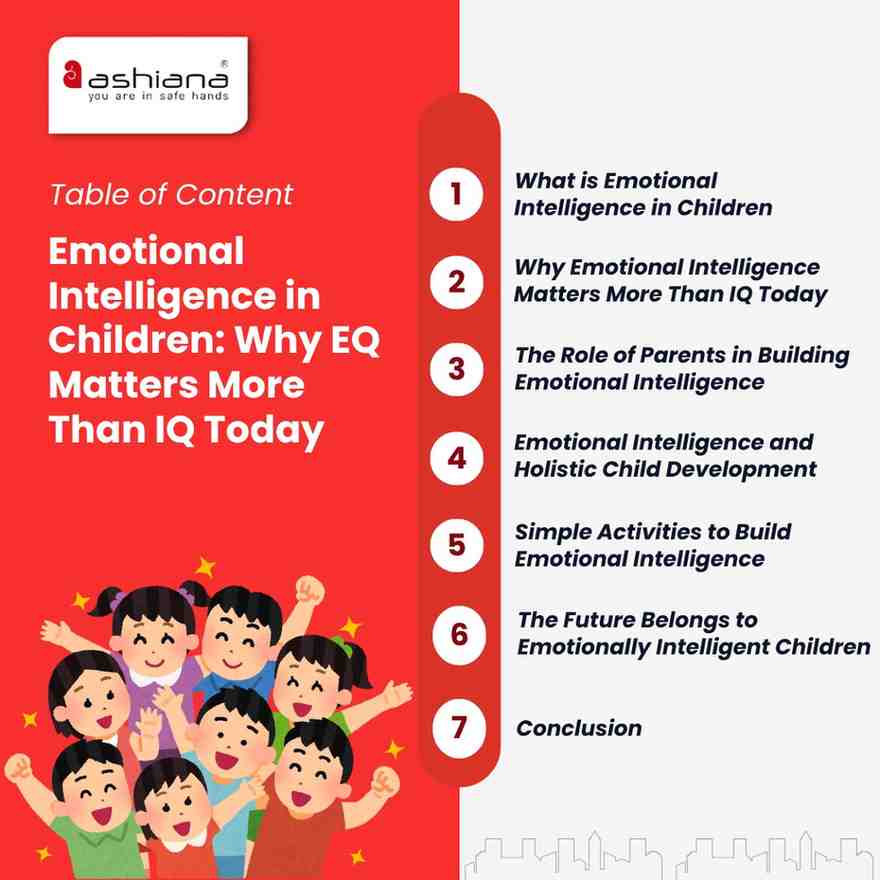
Emotional Intelligence refers to a child’s ability to understand, manage, and express emotions effectively. It also includes empathy, self-awareness, and social skills.
Unlike IQ, which remains relatively stable, Emotional Intelligence can be developed over time through experiences, environment, and effective parenting tips.
Key components of Emotional Intelligence include:
These elements are deeply connected to child psychology and form the foundation of strong emotional and social behaviour.
While IQ helps with academic performance, Emotional Intelligence determines how well a child navigates life. Studies show that skills like empathy, teamwork, and adaptability are highly valued in both education and careers.
Children with high Emotional Intelligence are more likely to:
This makes Emotional Intelligence a crucial factor in long-term success.
Parents play a central role in shaping a child’s emotional world. Through everyday interactions, children learn how to respond to situations and process their feelings. Thoughtful parenting tips can make a significant difference in nurturing Emotional Intelligence.
Creating a safe and open environment where children feel comfortable expressing themselves is essential. When parents listen without judgment and acknowledge their child’s emotions, it builds trust and emotional security. Over time, this strengthens both child psychology and emotional resilience.
It is equally important for parents to lead by example. Children often mirror adult behaviour, so demonstrating patience, empathy, and calmness helps reinforce positive emotional habits. These small yet consistent actions contribute greatly to children’s emotional development.
A strong foundation in Emotional Intelligence supports every aspect of a child’s growth. It enhances not just emotional well-being but also social skills, decision-making, and adaptability. This makes it a crucial element of overall child development.
Children who develop emotional awareness are better able to navigate social situations, resolve conflicts, and build lasting relationships. They also show greater resilience in the face of challenges, which is an essential life skill. This interconnected growth underscores the importance of children’s emotional development within a broader developmental framework.
Building Emotional Intelligence does not require complex methods. It can be nurtured through simple, everyday experiences. Conversations, storytelling, and shared activities all offer opportunities for children to understand emotions better.
Encouraging children to talk about their day, discuss how they feel, and reflect on situations helps them develop self-awareness. Over time, these habits become an integral part of their personality and contribute meaningfully to child development.
Consistent application of practical parenting tips ensures that children not only understand emotions but also learn how to manage them effectively. This gradual learning process strengthens both emotional stability and social confidence.
As the world becomes more interconnected and dynamic, the ability to collaborate, adapt, and empathise is becoming increasingly valuable. Emotional Intelligence is at the heart of these skills.
Children who grow up with strong emotional awareness are better prepared to face real-world challenges. They are more likely to lead with empathy, communicate effectively, and build meaningful connections. This makes Emotional Intelligence not just a skill, but a lifelong asset.
The importance of Emotional Intelligence in children is more relevant today than ever before. While academic success remains important, it is emotional strength that truly shapes a child’s personality and future.
By focusing on thoughtful parenting tips, understanding child psychology, and nurturing emotional development in children, families can create a strong foundation for well-rounded growth. In doing so, they support not just academic achievement, but complete child development.
Ultimately, investing in Emotional Intelligence is about preparing children for life, helping them grow into individuals who are confident, compassionate, and capable of thriving in any situation.
Join 1000+ of fellow readers. Get expert real estate knowledge straight to your inbox absolutely free. Just enter your email address below.


Leave a Reply