
Storytelling has always been an integral part of Indian culture. Passed down through generations, folk tales are not just stories, they are vessels of wisdom, culture, and imagination. In an age dominated by screens and instant content, introducing children to folk tales can open the door to timeless adventures, deep moral lessons, and creative thinking.
These stories, rooted in tradition, continue to hold immense value in shaping a child’s worldview and values. Let’s explore how Indian folk tales can inspire young minds and why they remain essential in every child’s growing years.
Folk tales are traditional stories that have been orally passed down from generation to generation. They often reflect the values, beliefs, and everyday experiences of a community or culture. These tales usually involve ordinary people, talking animals, or magical elements and are designed to teach life lessons, entertain, and preserve cultural heritage.
Folk tales are more than just bedtime stories. They play a vital role in:
Folk tales for kids often feature animals, village folk, clever tricksters, and mythical beings, all working through challenges with wit, bravery, and kindness. This blend of fantasy and morals makes them both entertaining and meaningful for young minds.
Also read: 15 Must-Read Books All Kids Should Read Before They’re 12
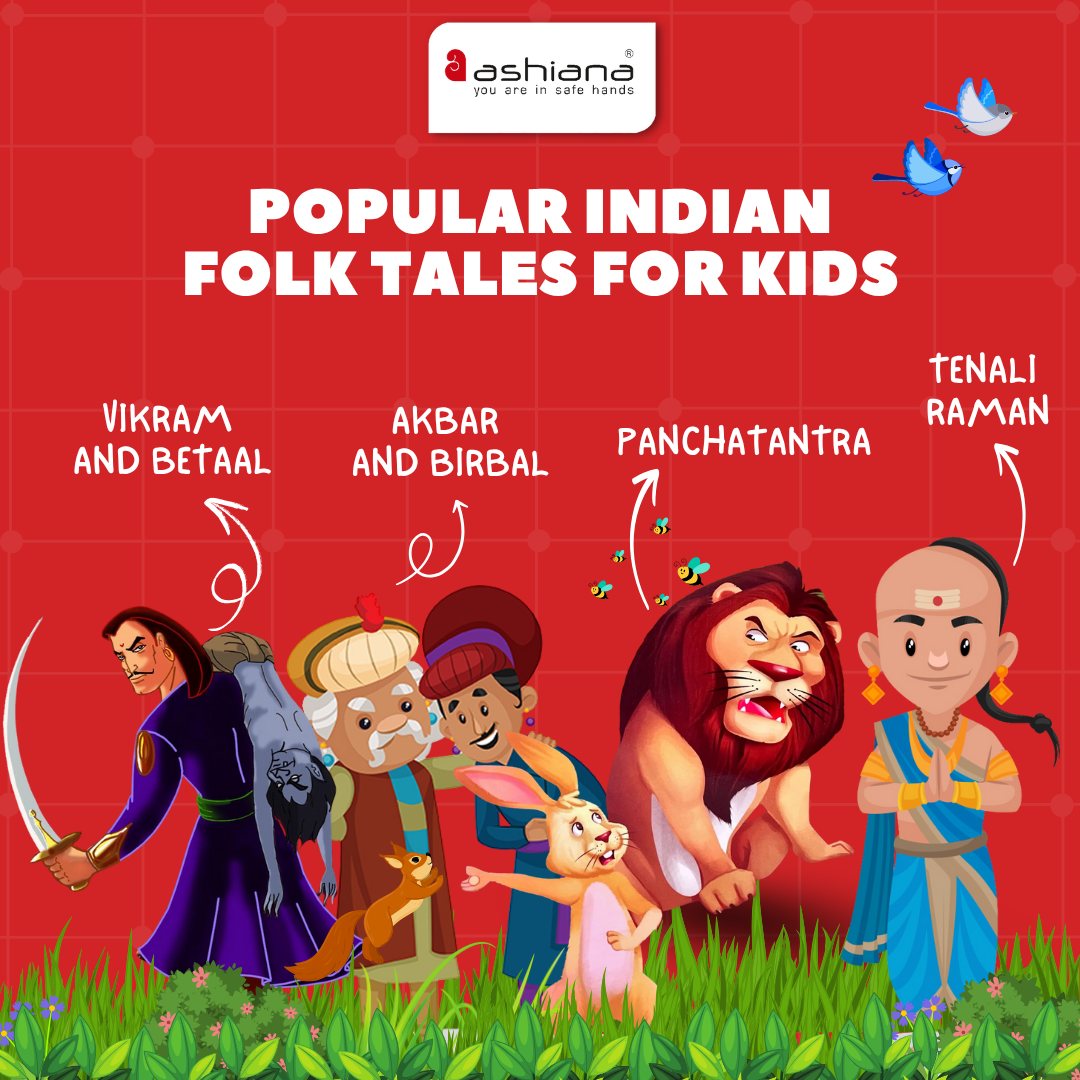
Here are some timeless folk tales for kids that continue to be cherished across generations:
Filled with humor and cleverness, these tales highlight the intelligence of Tenali Raman, a poet and advisor in King Krishnadevaraya’s court. He often uses wit and presence of mind to solve difficult problems and expose dishonesty in the kingdom.
In this famous tale, a cruel lion rules over the jungle and demands an animal sacrifice every day. One day, a clever rabbit delays his visit to the lion and tricks him into jumping into a well by pretending there’s another lion inside. The lion, fooled by his reflection, jumps in and drowns.
These classic Indian folk tales feature the Mughal emperor Akbar and his witty minister Birbal. In one tale, Akbar asks how many crows there are in his kingdom. Birbal responds with a clever guess and justifies it so logically that no one can argue.
In this suspenseful collection of stories, King Vikram carries the ghost Betaal on his shoulders. Each time, Betaal tells a tale and asks the king to solve a riddle at the end. If Vikram answers correctly, the ghost returns to the tree; if not, he wins.
This lesser-known yet fascinating tale features a terrifying Brahmarākṣas (a powerful demon) who terrorized villagers and lived in a haunted tree. One day, a clever young man learns that the demon’s life-force is hidden in a single strand of hair. By gaining the demon’s trust and ultimately plucking the hair, he destroys the Brahmarākṣas and frees the village.
Also read: Top 15 Best Panchatantra Stories for Kids
What makes folk tales so special for kids is their magical blend of fantasy and reality. Talking animals, magical trees, wise villagers, and tricky situations ignite a child’s creative thinking. As children visualize the story, they also begin to form their own versions, encouraging storytelling and self-expression.
Moreover, folk tales for kids often feature relatable characters who use simple tools or smart thinking to overcome problems. This not only inspires resourcefulness but also builds confidence in young readers and listeners.
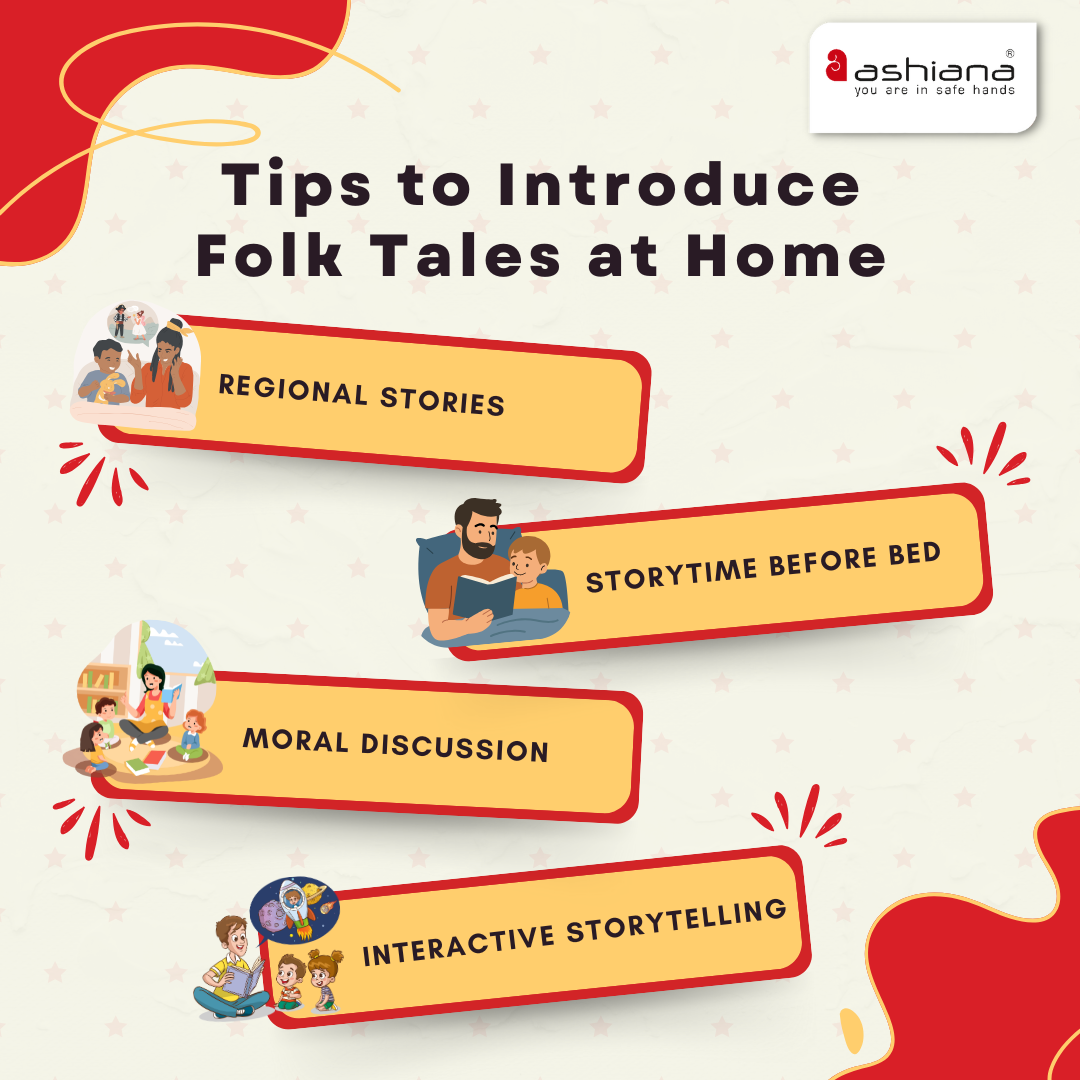
Bringing folk tales into your child’s daily life is easier than you think:
The goal is not just to entertain but to engage your child in reflective, imaginative thinking.
Also read: The Ultimate List: 10 Must-Read Indian Bedtime Stories for Kids
In a world filled with fast-paced entertainment, folk tales offer a much-needed pause, an opportunity to bond, reflect, and imagine. They provide a safe space for children to explore right and wrong, understand emotions, and learn about the world around them in a deeply meaningful way.
Sharing Indian folk tales also connects children to their heritage. It becomes a shared experience between generations, just like how our grandparents once told us stories that stayed with us forever.
Folk tales have stood the test of time for a reason. They’re not just age-old stories; they are tools that nurture empathy, creativity, and cultural understanding in children. By introducing your child to folk tales for kids, especially the vibrant and varied world of Indian folk tales, you’re giving them more than a story, you’re offering them lessons for life.
So sit down with your little one, open a book, or tell a tale from memory, and watch their eyes light up with imagination and wonder.
Join 1000+ of fellow readers. Get expert real estate knowledge straight to your inbox absolutely free. Just enter your email address below.


Leave a Reply