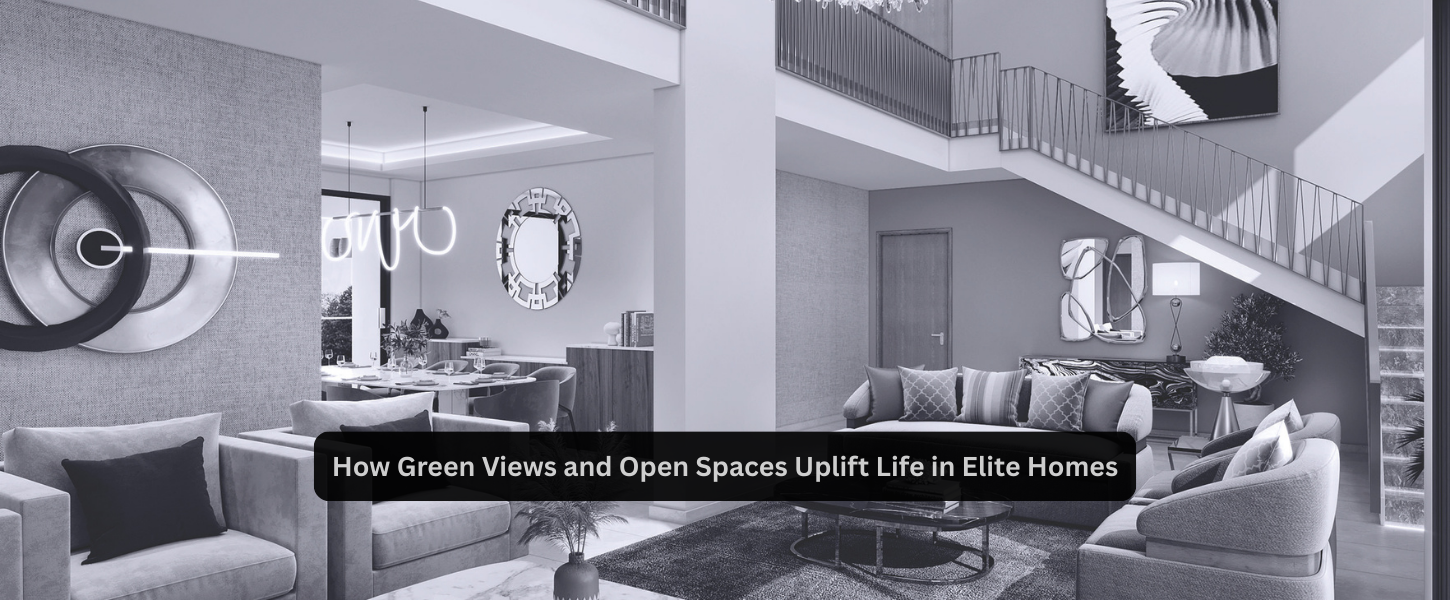

Luxury, in its truest sense, has moved beyond marble floors, grand facades, and curated interiors. The modern definition of elite living is increasingly shaped by something far more elemental: space, light, air, and above all, nature. Green views and open spaces are no longer seen as aesthetic add-ons. Instead, they have become foundational to well-being, longevity, and the psychological richness of everyday life.
In the world’s most coveted residences, the most valuable feature is not what is built, but what is preserved.
Human beings evolved in natural environments. Our nervous systems are calibrated to respond positively to greenery, open horizons, and organic forms. Numerous environmental psychology studies confirm that exposure to green spaces reduces cortisol levels, improves mood, and enhances cognitive function.
When elite homes offer uninterrupted views of landscaped gardens, tree-lined avenues, or open skies, they create a subtle but powerful shift in daily experience. Mornings begin with visual calm instead of visual noise. Evenings bring restoration rather than fatigue. Over time, this translates into lower stress, improved emotional balance, and sharper mental clarity.
Luxury, therefore, becomes not just visible, but deeply felt.
Open space is a form of architecture without walls. It shapes how residents breathe, move, and interact.
In high-density urban environments, the absence of open space creates a constant sense of compression. Elite residences counter this by integrating expansive setbacks, central greens, and low-density planning. These spaces do more than beautify; they regulate microclimate, improve ventilation, and enhance natural light penetration.
Homes that open into greenery rather than concrete experience:
These environmental advantages translate directly into physical comfort and long-term health.
Visual continuity, which is the ability to see beyond one’s immediate walls, is a defining marker of premium living.
A home overlooking greenery offers psychological expansion. The eye travels farther. The mind feels less confined. This sense of openness subtly influences creativity, optimism, and overall life satisfaction.
In contrast, residences facing dense construction often create visual fatigue and subconscious stress. Elite homes understand that what you see every day shapes how you feel every day.
A green view, therefore, is not decoration. It is emotional infrastructure.
Open spaces also transform how communities function. Shared greens, walking trails, and outdoor lounges encourage organic social interaction. Residents are more likely to walk, exercise, and engage with neighbors. This creates a sense of belonging without intrusion, which is a hallmark of refined communities.
Children benefit immensely. Access to safe, open play areas supports physical development, imagination, and emotional resilience. For older residents, green walking paths promote mobility and longevity. Elite living is not isolation. It is a curated connection.
From a real estate perspective, homes with green views and access to open spaces consistently outperform those without.
They command:
This is because land allocated to open space is finite and irreplaceable. As cities densify, such residences become increasingly rare, and therefore increasingly valuable.
Nature, in this context, becomes both a lifestyle asset and a financial asset.
True luxury engages all senses. Open spaces introduce soundscapes that differ dramatically from urban noise. The rustle of leaves, distant birdsong, and softened ambient sound create an atmosphere of calm.
Air quality improves. Natural light shifts dynamically throughout the day, enhancing circadian rhythms and sleep quality. Even time feels different in such environments, slower, fuller, and more intentional. Residents do not merely occupy space. They experience it.
Interestingly, open spaces also enhance privacy. When buildings are thoughtfully spaced and surrounded by greenery, residents experience less visual intrusion. Windows open to trees rather than neighboring balconies. Balconies become personal retreats rather than exposed platforms. Privacy, in elite homes, is achieved through distance and design and not isolation.
There is a quiet shift happening in how the world defines aspiration. Excess is giving way to essence. The most desirable homes are not those that overwhelm the senses, but those that restore them.
Green views and open spaces represent a return to what truly sustains human life.
They offer:
They transform houses into sanctuaries.
This philosophy finds tangible expression at Ashiana ONE44, where the relationship between home and nature has been carefully and intelligently designed. Here, expansive green landscapes, thoughtful spatial planning, and low-density living create an environment where openness is not a feature, but a foundation. Residences are positioned to maximise green views, natural light, and privacy, offering a lifestyle that balances urban connectivity with restorative calm. It is a place where luxury is not defined by excess, but by space, air, and the privilege of living close to nature.
Join 1000+ of fellow readers. Get expert real estate knowledge straight to your inbox absolutely free. Just enter your email address below.


Leave a Reply