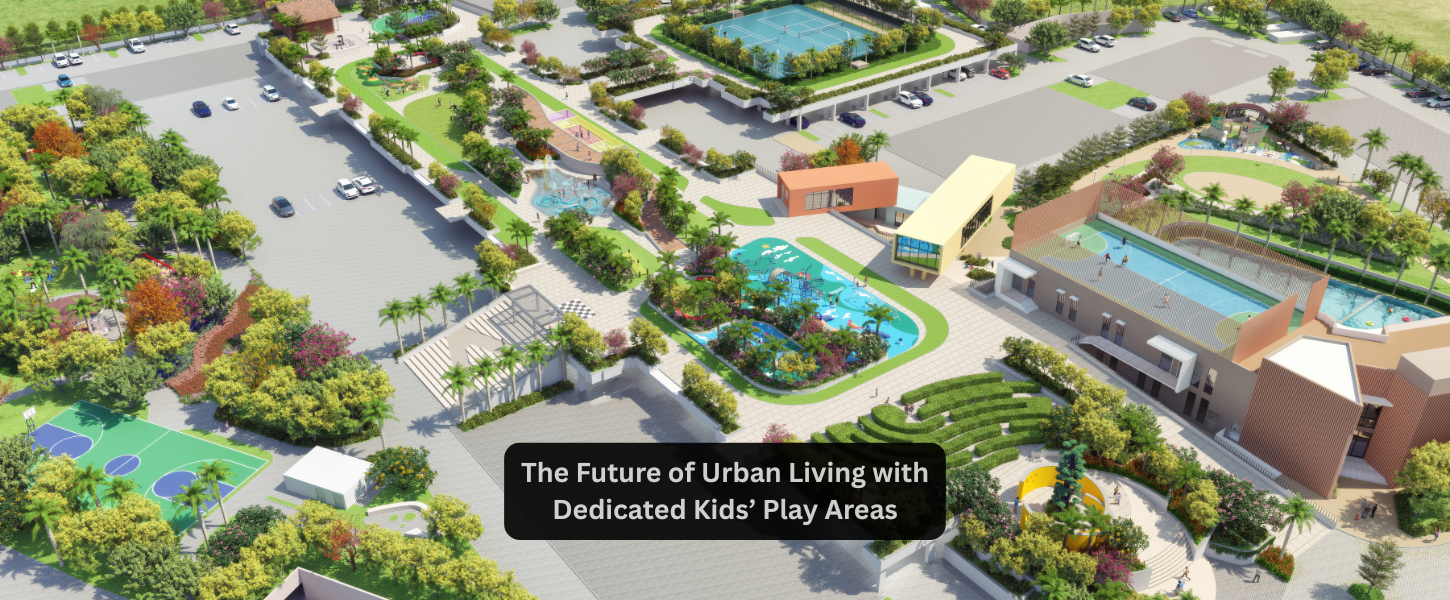

As the cities are expanding and family lifestyles evolving, the idea of an ideal home is being redefined. Today’s urban parents seek not just comfort but nurturing environments that support their children’s overall growth and happiness. Kids’ play areas have become an essential part of modern residential spaces, offering safe, interactive spaces where children can explore, learn, and thrive.
The idea is simple yet powerful: homes should nurture every family member, especially the youngest. For children, play is not just leisure; it’s an essential part of child development. And for parents, having well-designed, safe play zones within their community means peace of mind and a better quality of life.
Children learn best through play, which enhances creativity, motor skills, social awareness, and emotional intelligence. When kids have easy access to play areas within their family-friendly communities, they naturally engage in physical activities that boost strength and coordination. Beyond physical development, these spaces also nurture teamwork, empathy, and confidence- all vital aspects of holistic child development.
Parents often worry about outdoor play in busy cities. Thoughtfully designed safe play zones address this concern by offering enclosed, age-appropriate environments for children to explore freely. Features like soft flooring, rounded edges, shaded structures, and parental supervision areas ensure that playtime remains safe. Kids enjoy the freedom of outdoor play for kids, while parents relax knowing their little ones are protected.
A child’s laughter brings families closer. Having designated kids’ play areas allows parents to spend quality time outdoors with their children without leaving the community. Whether it’s a weekend cycle race, a board game, or simply watching children play, these shared experiences create strong emotional bonds and lasting memories within family-friendly communities.
In the rush of urban living, family time often gets limited. Proximity to kids’ play areas helps parents easily include recreation in their children’s daily routines. No long drives to parks, no traffic stress- just spontaneous, joyful moments right outside the home. This convenience fosters a balanced lifestyle where work, rest, and play coexist seamlessly within modern residential spaces.
Children often become the connection point between neighbors. When they meet in kids’ play areas, parents naturally form new friendships, creating a more connected, harmonious environment. These family-friendly communities serve as the social heart of urban living, building a sense of belonging and trust among residents.
Modern residential projects now go beyond swings and slides. The focus is on thoughtfully designed play ecosystems that support a child’s all-around development.
The advantages of dedicated kids’ play areas go far beyond physical activity. Psychologically, these spaces create emotional balance and social confidence.
As urban living grows vertically, developers are reimagining how to integrate child-friendly spaces into modern residential spaces. Play zones are now placed close to homes, surrounded by walking tracks, landscaped gardens, and relaxation corners, transforming traditional layouts into lifestyle-driven ecosystems.
Some family-friendly communities even include “learning streets” or adventure zones, blending play equipment with natural elements like sand, trees, and stones. This approach reconnects children with nature and supports active, outdoor lifestyles in an era dominated by screens.
Families today are drawn to communities that prioritize both comfort and child development. Recognizing this, Ashiana Housing continues to create family-friendly communities that blend joy, learning, and safety seamlessly.
One such example is Ashiana Amarah in Gurgaon, built around the philosophy of “Behtar Parvarish ka Pata.” This community features the innovative Play Street with treehouses, sand zones, cycling paths, and sensory play areas- a true haven for outdoor play for kids. Surrounded by greenery and open spaces, it promotes learning, social connection, and exploration, setting a new benchmark for modern residential spaces that nurture family life.
The future of urban living lies in communities that truly understand family needs. Homes designed with dedicated kids’ play areas go beyond recreation- they foster learning, connection, and happiness. These thoughtfully designed safe play zones bring joy to children, peace of mind to parents, and unity to neighborhoods, shaping family-friendly communities where every generation thrives.
Join 1000+ of fellow readers. Get expert real estate knowledge straight to your inbox absolutely free. Just enter your email address below.


Leave a Reply