

When purchasing an apartment, various factors influence your decision, and one key aspect that often goes unnoticed is the loading factor. Understanding this term can significantly impact your homebuying experience and the overall value of your investment.
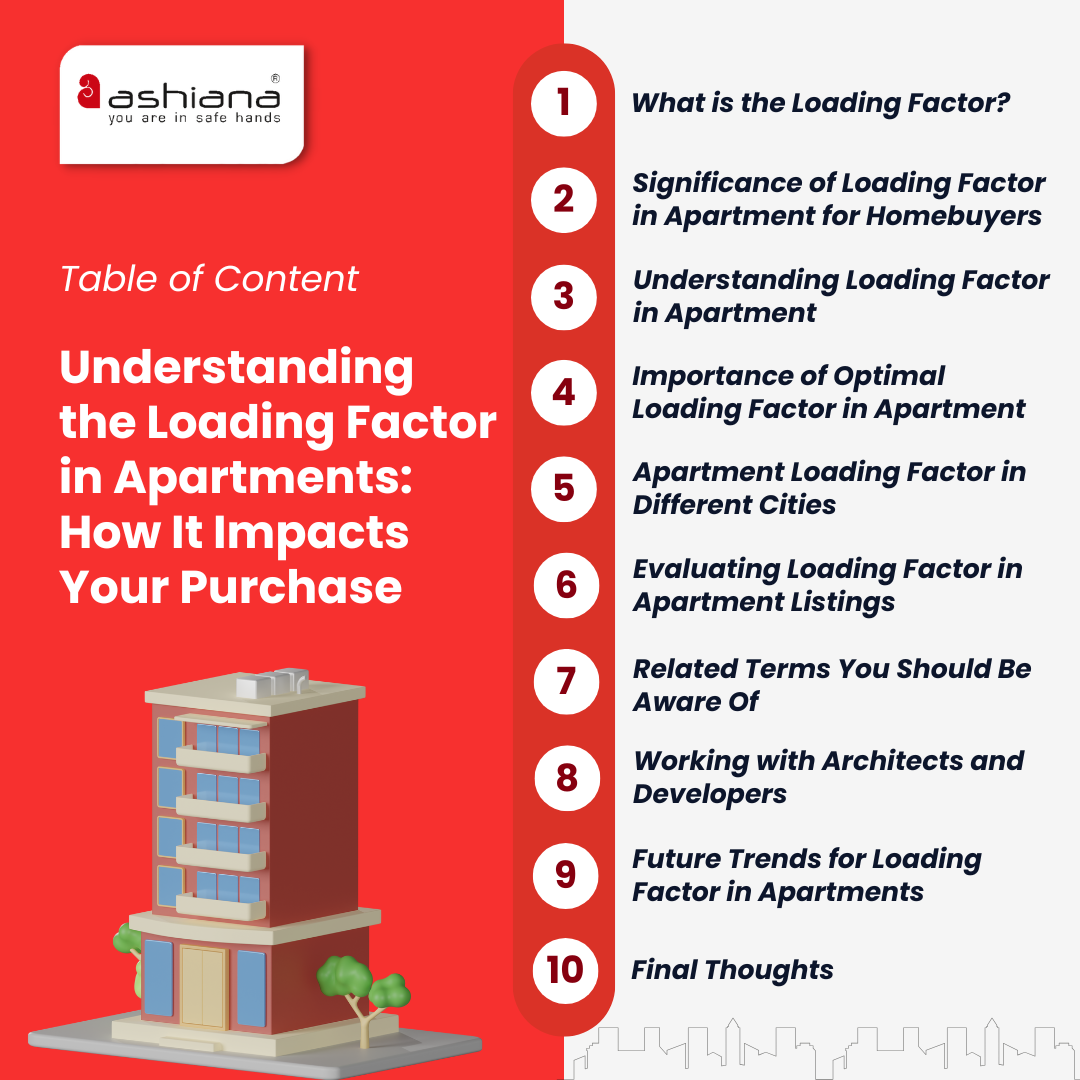
The loading factor is a metric used in real estate to determine the proportion of common areas in a multi-unit building compared to the usable area of an apartment. It is calculated by taking the ratio of the carpet area (usable space) to the super built-up area (total space including common areas) and subtracting that ratio from 1.
This result indicates the percentage of space that is considered shared or common about the total area you are paying for. A higher loading factor means more shared space, while a lower loading factor means more usable space. Understanding the loading factor is crucial when purchasing a residential property.
The loading factor is calculated by dividing the total built-up area by the carpet area and subtracting one from the result:
| Loading Factor = 1- (Built-Up Area / Carpet Area) |
If a builder quotes a 30% loading factor, it means 30% of the total built-up area is allotted to common spaces, and 70% is the actual usable carpet area.
The loading factor plays a critical role in determining the effective square footage you own. A higher loading factor means that a more significant portion of your purchase price is attributed to shared areas rather than your unit. This can affect your monthly maintenance fees and the overall value of the property. Understanding this factor helps homebuyers make informed decisions about the true size and value of their potential investment.
The loading factor varies among buildings and is influenced by design choices and the availability of amenities. Some buildings may have more lavish common areas, which can lead to a higher loading factor, while others may be more utilitarian. When reviewing floor plans and listings, always look for the loading factor, as it provides a clearer picture of how much space you will have in your private residence versus shared areas.
Key aspects of the loading factor in apartments include:
| CITY | Loading Factor (in%) |
| Mumbai (MMR) | 40-50 |
| Delhi NCR | 30-40 |
| Bangalore | 20-30 |
| Chennai | 25-30 |
The loading factor can vary significantly from city to city, influenced by local real estate trends, urban planning regulations, and the overall design philosophy of builders. For example, metropolitan areas with a high demand for luxury amenities, like New York City or San Francisco, may have higher loading factors compared to suburban developments. Understanding these regional differences can help homebuyers gauge whether they are getting value for their money.
When browsing apartment listings, look for explicit mention of the loading factor. If it’s not readily available, don’t hesitate to ask the real estate agent or developer. Additionally, compare the loading factors of similar properties within the area to ensure you’re making an informed decision. This evaluation will help you identify whether a property is fairly priced based on its loading factor.
If you’re involved in the design or purchasing process, collaborating with architects and developers can help you understand the loading factor. They can provide insights into how the design impacts the loading factor and help you select a property that fits your requirements. Discussing your needs and preferences early in the process can lead to better outcomes regarding your investment.
As urban living evolves, trends in loading factors are likely to shift. Increasing demand for shared spaces due to lifestyle changes may lead to higher loading factors in some developments. However, as buyers become more aware of the implications of loading factors, developers may adapt their designs to favor lower loading factors with essential communal areas. Keeping an eye on these trends will help prospective buyers make better-informed choices.
Understanding the loading factor in apartments is essential for homebuyers looking to make informed purchasing decisions. It impacts not only the effective square footage of your living space but also your overall financial investment. By considering the loading factor alongside other critical factors, you can ensure your new apartment meets your needs while providing long-term value. As you navigate the real estate market, prioritize awareness of loading factors to enhance your buying experience and secure a home that aligns with your lifestyle and financial goals.
Join 1000+ of fellow readers. Get expert real estate knowledge straight to your inbox absolutely free. Just enter your email address below.


Leave a Reply