
Children today are growing up in a rapidly evolving world where learning extends far beyond textbooks and classrooms, becoming more interactive, dynamic, and rooted in everyday experiences. This shift has positioned play-based learning as a powerful approach in early childhood education, helping children learn through exploration and engagement. At the same time, modern parents are recognizing that meaningful kids’ activities at home are not just about keeping children occupied, they play a vital role in shaping how children think, communicate, and respond to the world around them. By encouraging structured play, families are supporting essential aspects of child development, from problem-solving to emotional growth, making it an integral part of holistic learning.
At its core, play-based learning is an approach where children learn through play, through activities that are engaging, enjoyable, and purposeful.
While both are important, there is a key difference:
Structured play doesn’t take away fun, it adds intention. For example, solving puzzles, role-playing, or participating in guided learning activities for kids helps children develop specific skills while still enjoying the process.
With increased screen time and reduced outdoor exposure, structured kids learning activities are helping bring balance back into children’s routines. Parents are now actively seeking educational activities for kids that are both engaging and developmental.
Structured play is not just an activity, it’s a foundation for lifelong skills.
Activities like puzzles, memory games, and building blocks improve focus, reasoning, and decision-making, forming a strong base for child development.
Role-playing and group play help children develop empathy, patience, and emotional regulation, essential life skills often overlooked.
Structured play promotes independent thinking, idea exploration, and creative problem-solving, which are key aspects of early childhood education.
Engaging in meaningful kids activities naturally shifts children away from passive screen time toward more active and enriching learning experiences.
Here are five simple yet impactful play-based learning activities parents can introduce at home:
Pretend play, like playing “teacher,” “doctor,” or “shopkeeper”, helps children understand real-world situations. It builds communication skills, imagination, and emotional awareness.
Parenting tip: Join in occasionally to guide conversations and introduce new scenarios.
From jigsaw puzzles to logic games, these activities improve concentration and analytical thinking. These are excellent learning activities for kids that strengthen memory and attention span.
Drawing, painting, and DIY crafts allow children to express themselves freely. Such educational activities for kids nurture creativity while improving fine motor skills.
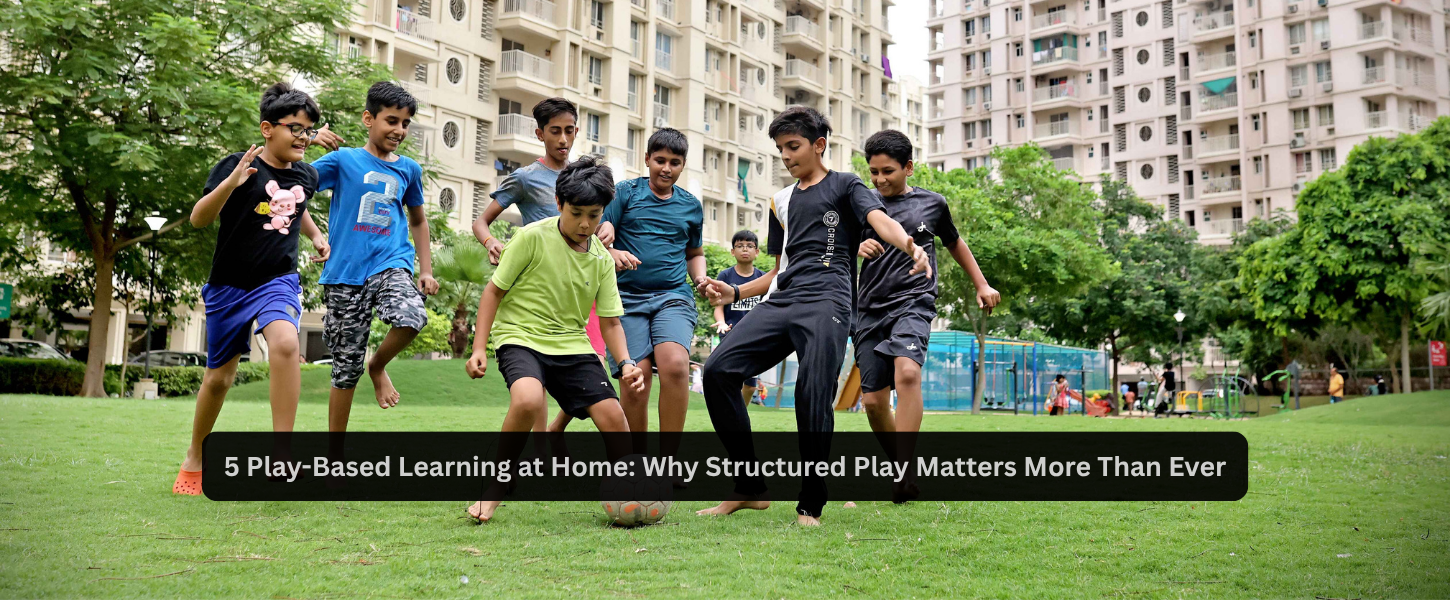
Running, cycling, or simple games like tag are essential for physical and mental well-being. Outdoor kids’ activities also help children develop social skills and confidence.
Board games or collaborative activities teach teamwork, patience, and conflict resolution. These kids’ learning activities are especially valuable in building social intelligence.
A child’s environment quietly shapes their growth and learning. Open, flexible spaces encourage exploration, while a safe setting builds confidence to experiment. Living in a community with peers fosters interaction, helping children develop social skills naturally through collaborative play and meaningful play-based learning experiences.
As parenting evolves, so does the way homes are designed. Modern living spaces are increasingly focused on supporting children’s growth, not just accommodating families.
Today’s thoughtfully designed communities are incorporating:
This shift reflects a deeper understanding of how the environment influences child development.
Some developers, like Ashiana Housing, have recognized this need and focus on creating kid-centric homes where safety, play, and learning are seamlessly integrated into everyday living. The idea is not just to provide a house, but to create an ecosystem where children can thrive through structured and meaningful experiences.
In today’s evolving world, parenting must adapt to how children learn. Play-based learning is now essential for raising confident and emotionally strong individuals. Structured play builds life skills while keeping learning joyful. Through simple kids activities and supportive environments, every moment contributes to growth, shaping not just how children learn, but who they become.
Join 1000+ of fellow readers. Get expert real estate knowledge straight to your inbox absolutely free. Just enter your email address below.


Leave a Reply