
India, with its rapidly growing economy and vast population, has emerged as a global hub for real estate investment. The increasing urbanization, expanding middle class, and supportive government policies have driven a transformation in the Indian real estate sector in recent years. Key factors contributing to this change include booming infrastructure projects, improved ease of doing business, and the surging demand for residential and commercial spaces.
However, like any investment, the key to maximizing returns lies in choosing the right market. This blog delves into emerging markets in India, highlighting the best cities for real estate investment. We’ll explore the factors that make these cities stand out and provide an in-depth analysis of their current and future prospects.
Bengaluru, often referred to as the “Silicon Valley of India,” has long been a favorite among real estate investors. The city is a global IT hub, housing numerous multinational corporations, startups, and tech parks. The robust job market and influx of young professionals have created a consistent demand for residential and commercial properties.
The demand for mid-segment and luxury housing has seen a steady rise in Bengaluru. The city’s real estate market has demonstrated resilience, with property values appreciating consistently over the years. The ongoing metro rail expansion and infrastructural upgrades are expected to further enhance the city’s real estate prospects.
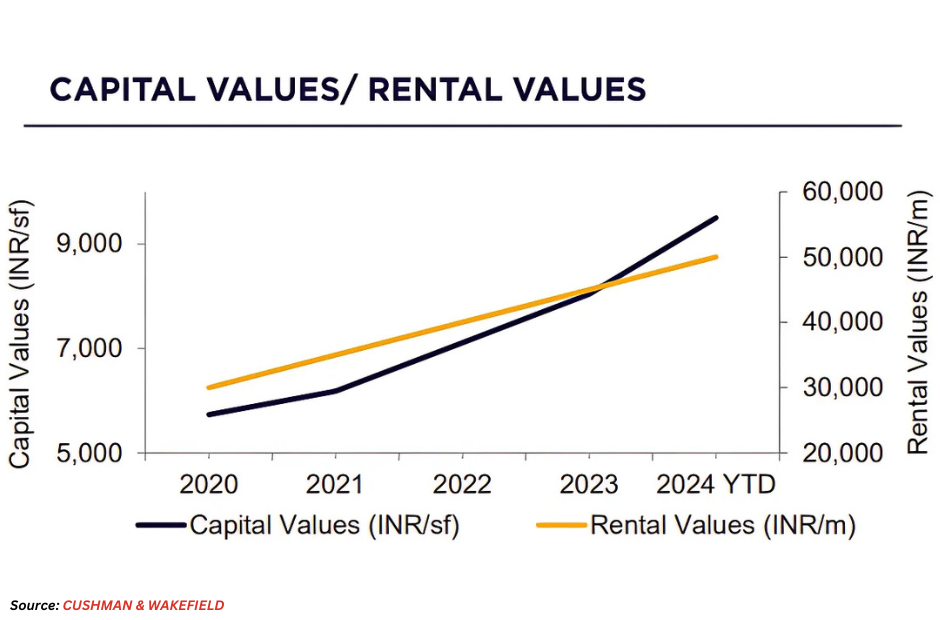
Hyderabad, also known as Cyberabad, has emerged as one of the fastest-growing real estate markets in India. The city boasts a thriving IT and pharmaceutical industry, excellent infrastructure, and a relatively lower cost of living compared to other major metros.
Hyderabad’s real estate market has been characterized by affordability and rapid appreciation. Proactive government policies, such as the Telangana State Industrial Project Approval and Self-Certification System (TS-iPASS), have attracted significant investments. The planned expansion of the metro rail network and the construction of the Regional Ring Road are expected to further enhance the city’s real estate prospects.
 .
.
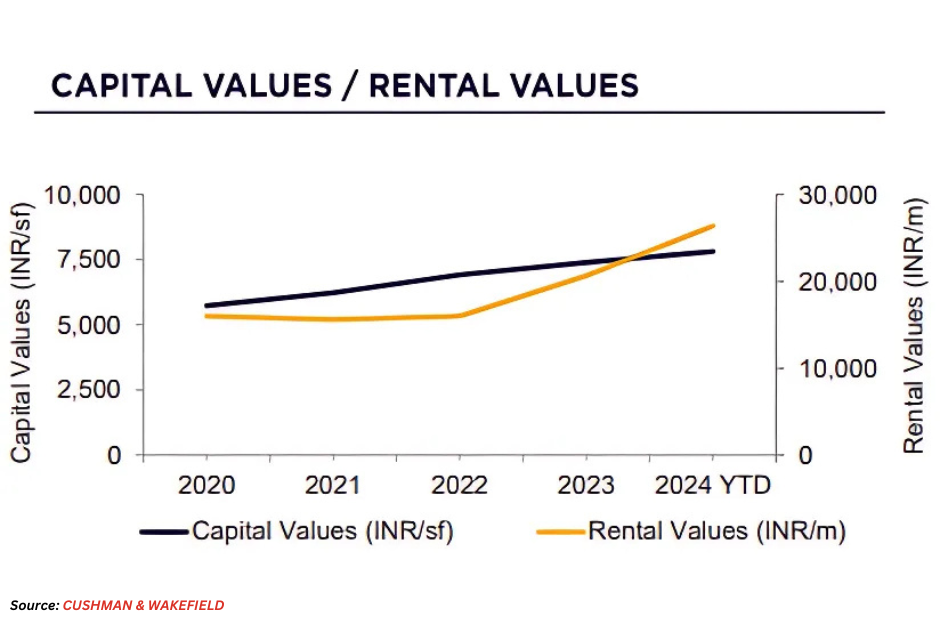
Pune, known as the “Oxford of the East” due to its numerous educational institutions, has become a prominent real estate destination. The city’s proximity to Mumbai, pleasant climate, and thriving IT and manufacturing sectors make it an attractive choice for investors.
Pune’s real estate market has shown consistent growth, driven by the city’s expanding IT sector and the influx of students and professionals. Infrastructure developments, such as the upcoming Pune Metro and the expansion of the Mumbai-Pune Expressway, are expected to further boost the real estate market.
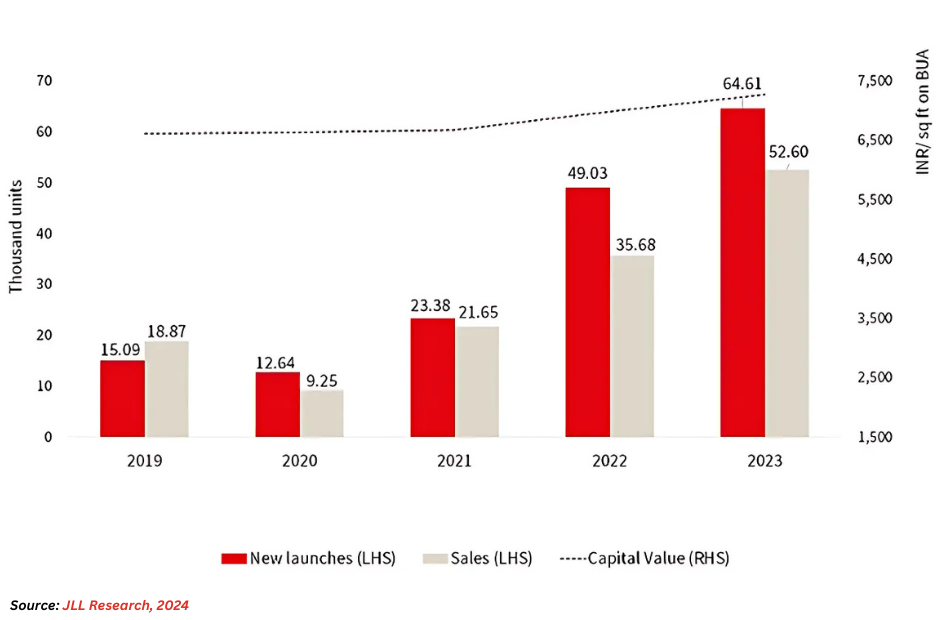
Chennai, the capital of Tamil Nadu, is a major industrial and commercial hub in South India. The city’s diverse economy, which includes automobile manufacturing, IT, and healthcare, has created a steady demand for real estate.
Chennai’s real estate market has shown resilience, with steady demand for both residential and commercial properties. Infrastructure developments, such as the expansion of the Chennai Metro and the construction of the Chennai Peripheral Ring Road, are expected to enhance the real estate market further.
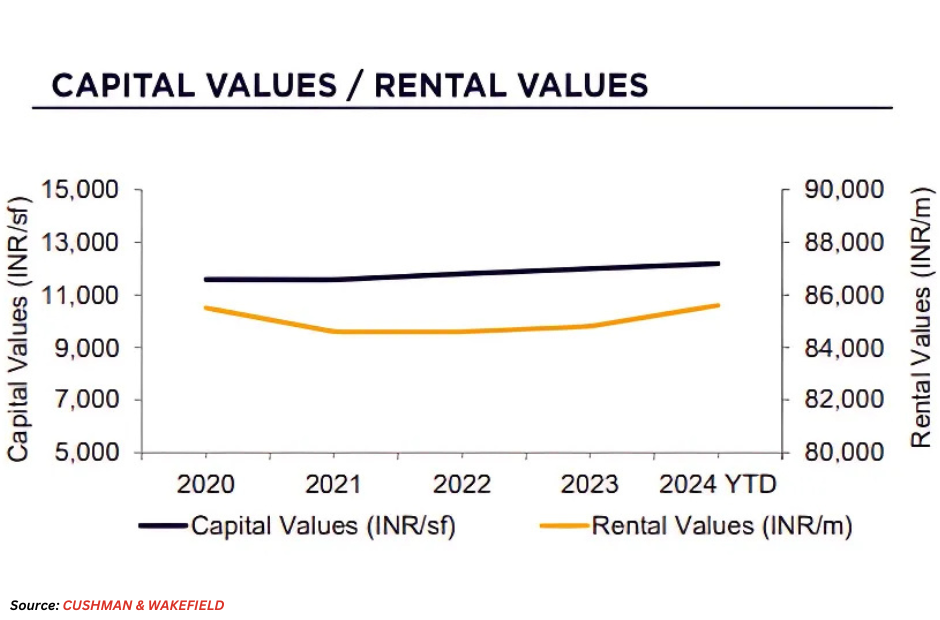
Delhi, the capital of India, stands as a prominent real estate market, characterized by its historical significance, robust infrastructure, and status as a major commercial and political hub. With a high standard of living and vast opportunities across sectors, Delhi attracts both residential and commercial investors.
Delhi’s real estate market remains stable, with consistent demand for both residential and commercial properties. With improvements in infrastructure, particularly metro and road connectivity, as well as newer developments in green spaces, the market holds strong appeal for long-term investors.
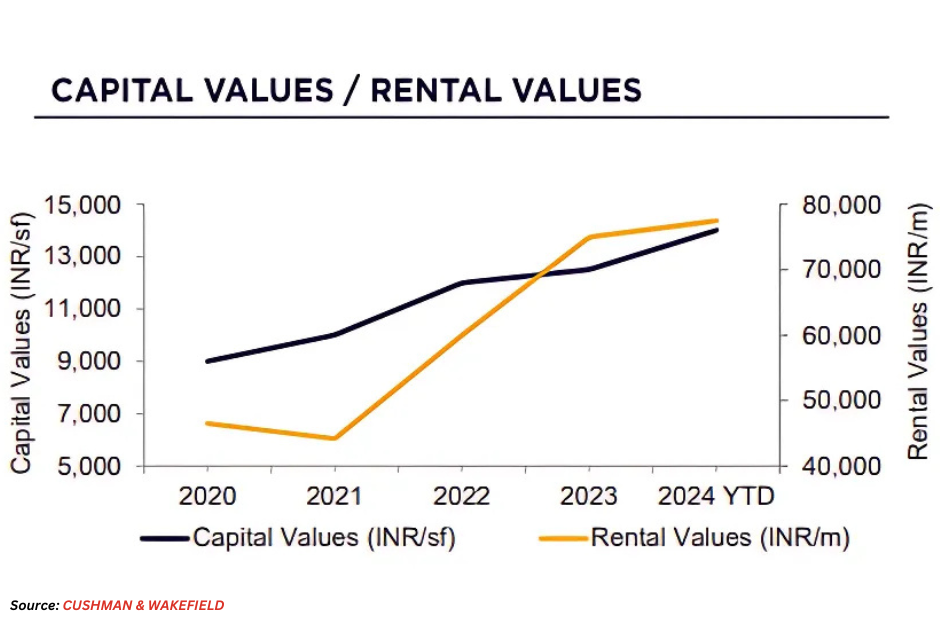
Noida and Greater Noida, part of the National Capital Region (NCR), have emerged as major real estate hubs. The cities offer affordable housing, excellent connectivity to Delhi, and a growing industrial base, making them attractive to investors.
Noida and Greater Noida have seen rapid growth in their real estate markets, driven by affordable housing, infrastructure development, and proximity to Delhi. The upcoming Jewar Airport and the expansion of the metro network are expected to further boost the real estate market. Additionally, the Greater Noida Industrial Development Authority (GNIDA) has announced a 5.30% increase in land allocation rates for the 2024-25 fiscal year, effective from April 1, 2024, for industrial, residential, commercial, institutional, and builder properties. Key projects such as the Greater Noida West Metro, Multimodal Logistics Hub, and Transport Hub are driving this development.
Known as the “Pink City,” Jaipur combines its historic charm with modern development, making it an emerging real estate hotspot. Jaipur’s growing economy, strong tourism industry, and upcoming IT and business parks have significantly raised its investment appeal.
Jaipur’s real estate market has gained momentum, with demand increasing in both residential and commercial segments. Infrastructure projects such as metro expansions and new industrial zones are expected to further bolster real estate demand.
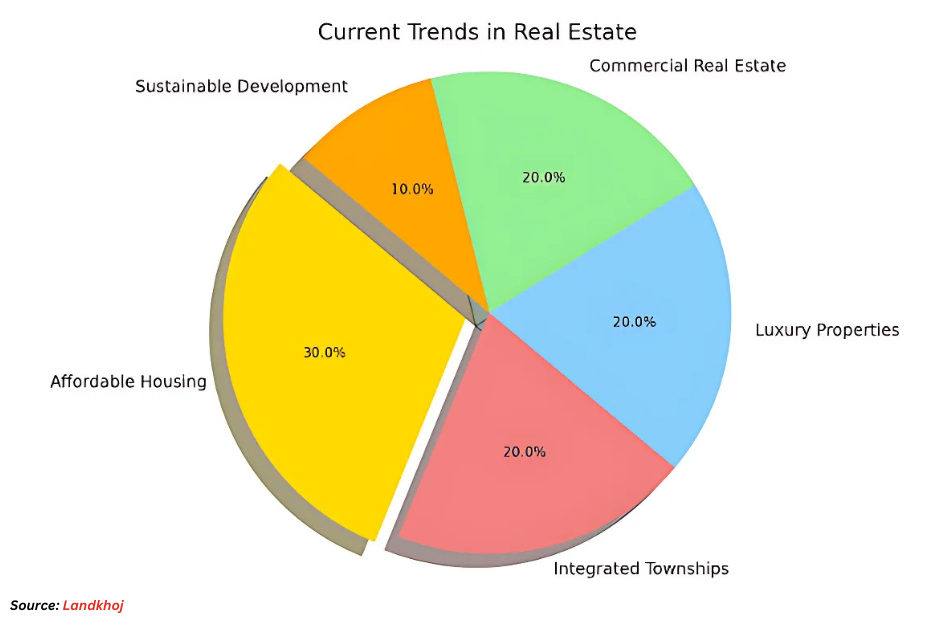
Ahmedabad, the largest city in Gujarat, has emerged as a major industrial and commercial hub. The city’s well-developed infrastructure, growing industrial base, and favorable government policies have created a conducive environment for real estate investment.
Ahmedabad’s real estate market has shown consistent growth, driven by the city’s expanding industrial base and favorable government policies. The upcoming Ahmedabad Metro and expansion of the city’s road network are expected to further boost the real estate market.
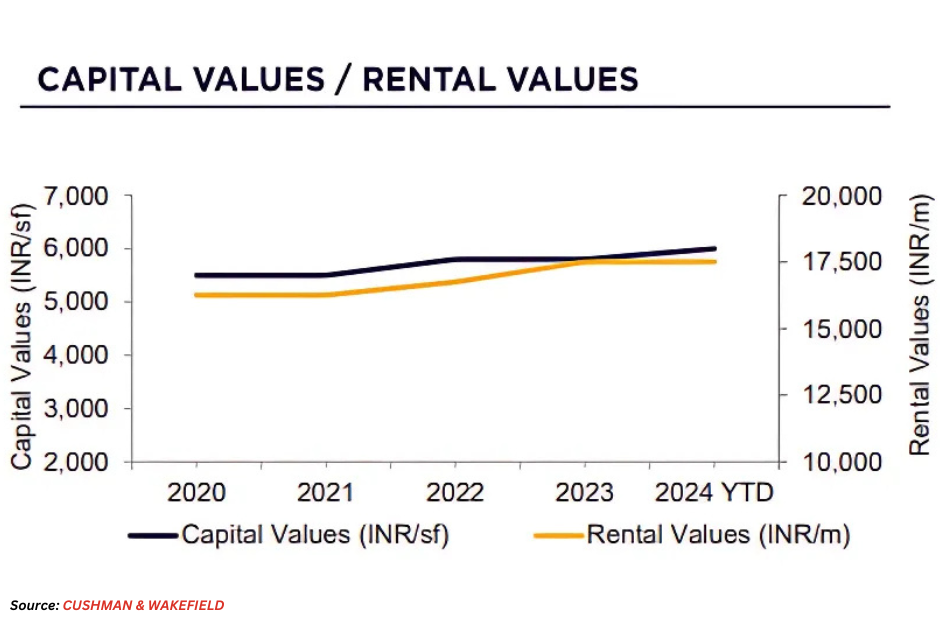
Gurgaon, also known as Gurugram, is a prime location for real estate investments due to its booming corporate sector, particularly in IT and finance. The city’s proximity to Delhi, coupled with state-of-the-art infrastructure and luxury housing, has made it a sought-after location.
Gurgaon’s real estate market continues to grow, driven by demand for both luxury and mid-segment housing. Infrastructure improvements, such as the expansion of the Dwarka Expressway and enhanced metro connectivity, are expected to sustain this growth and maintain Gurgaon’s appeal for investors. Notably, New Gurugram and the Dwarka Expressway have emerged as the top-performing micro real estate markets in the country, with an annual growth of 53% and 34%, respectively, in average capital values of under-construction properties over the last year, as per an analysis by Savills India, a global consulting firm.
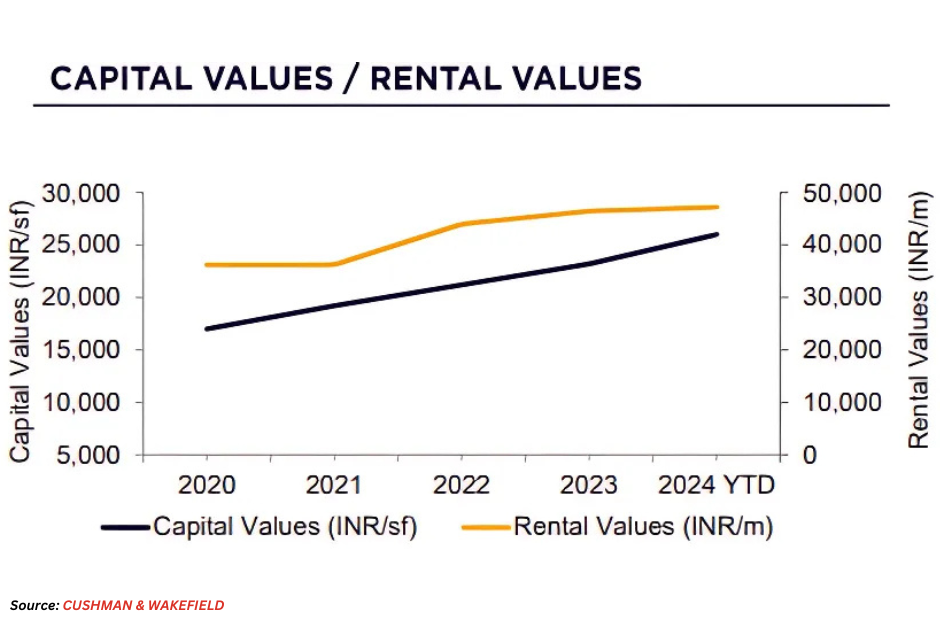
Mumbai, the financial capital of India, has always been a hotspot for real estate investment. The Mumbai Metropolitan Region (MMR) encompasses Mumbai and its satellite cities, including Navi Mumbai, Thane, and Kalyan-Dombivli. The region’s thriving economy, excellent infrastructure, and high demand for residential and commercial properties make it a prime destination for real estate investment.
The MMR’s real estate market has shown resilience, with steady demand for both residential and commercial properties. Infrastructure development, such as the upcoming Navi Mumbai International Airport and the expansion of the Mumbai Metro, is expected to further boost the real estate market.
Join 1000+ of fellow readers. Get expert real estate knowledge straight to your inbox absolutely free. Just enter your email address below.


Leave a Reply