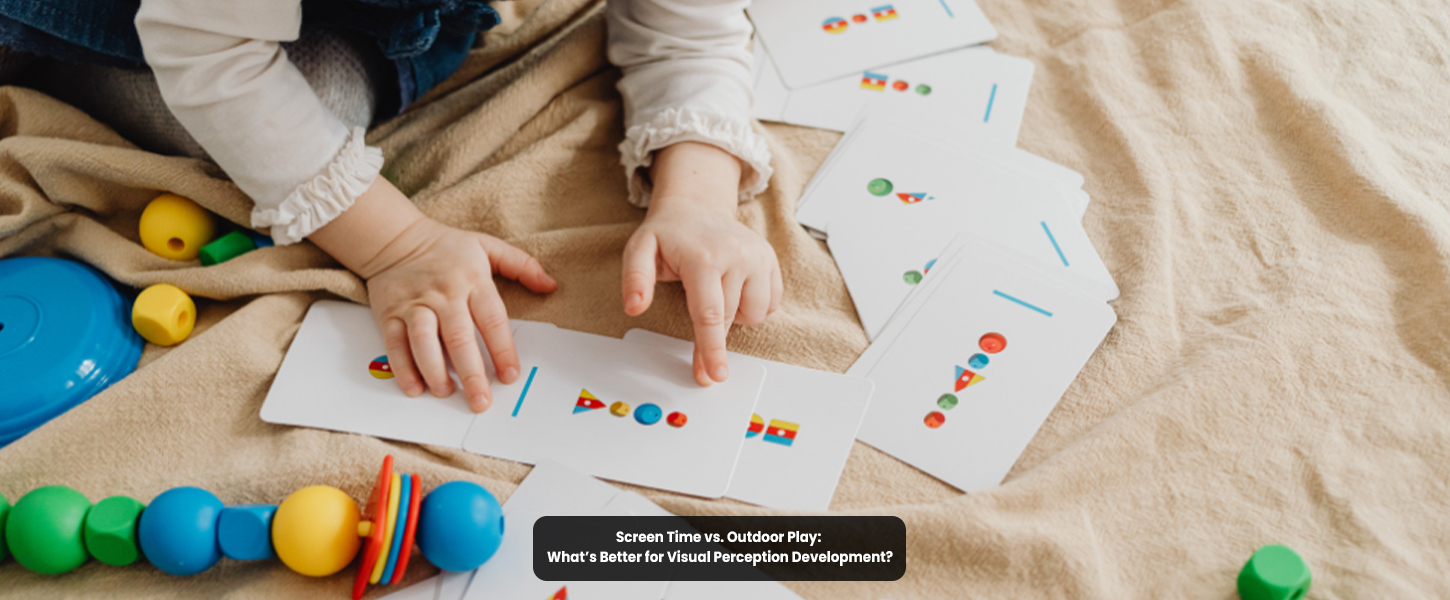

Visual perception is a foundational skill that plays a critical role in how children interact with the world. It is the ability to process and interpret visual information, helping children make sense of their surroundings, understand spatial relationships, and perform everyday tasks like reading, writing, and recognizing patterns.
As technology becomes an integral part of childhood, parents are left wondering: does screen time aid or hinder the development of visual perception? How does it compare to outdoor play, which has long been celebrated for its holistic benefits? Let’s explore these questions while understanding the impact of both on visual perception.
Visual perception goes beyond simply seeing clearly; it involves interpreting what is seen. This skill helps children recognize objects, understand spatial relationships, and differentiate between shapes, sizes, and patterns. It’s essential for activities such as:
Strong visual perception skills are essential for academic success, motor skill development, and even emotional well-being.
Also read: The Negative Effects of Excessive Screen Time
Screen time, when used purposefully, can help develop certain aspects of visual perception. Educational apps, video games, and animated content often incorporate elements like pattern recognition, color differentiation, and hand-eye coordination. For instance:
However, excessive screen time comes with its drawbacks. Prolonged exposure can lead to digital eye strain, reduced attention spans, and limited opportunities for real-world exploration. Static screens cannot replicate the dynamic and multi-sensory learning experiences that outdoor environments provide.
Outdoor play offers a rich environment for developing visual perception skills naturally. The varied stimuli of the outdoors engage multiple senses and encourage physical activity, which contributes to a child’s overall development.
Moreover, natural light exposure during outdoor play helps maintain healthy vision and reduces the risk of myopia (nearsightedness), which is increasingly common in children who spend too much time indoors.
Also read: Balancing Screen Time and Physical Activities for Kids
While screens can provide controlled and focused learning opportunities, outdoor play offers a more comprehensive approach to developing visual perception. Here’s why:
While outdoor play offers unmatched benefits, screen time isn’t inherently bad. The key is to strike a balance and use screens purposefully. Here are some tips:
Set age-appropriate limits for screen usage. For younger children, prioritize activities that are interactive and educational.
Encourage children to spend time outdoors daily. Activities like playing catch, gardening, or exploring parks provide rich opportunities for developing visual perception.
Combine the benefits of both by using technology to enhance outdoor exploration. Apps that identify plants, stars, or animals can make outdoor play more engaging and informative.
Children often mimic their parents’ habits. Show them the importance of balancing screen time with outdoor activities by practicing it yourself.
In the battle of screen time vs. outdoor play, outdoor play emerges as the clear winner for fostering visual perception development. However, screen time can serve as a valuable supplement when used in moderation and with purpose.
Visual perception is a cornerstone of a child’s cognitive and motor skill development, and nurturing it requires a mix of active exploration and structured learning. By encouraging children to engage with the natural world while also leveraging the benefits of technology, parents can ensure their children grow into perceptive, well-rounded individuals.
Join 1000+ of fellow readers. Get expert real estate knowledge straight to your inbox absolutely free. Just enter your email address below.


Leave a Reply