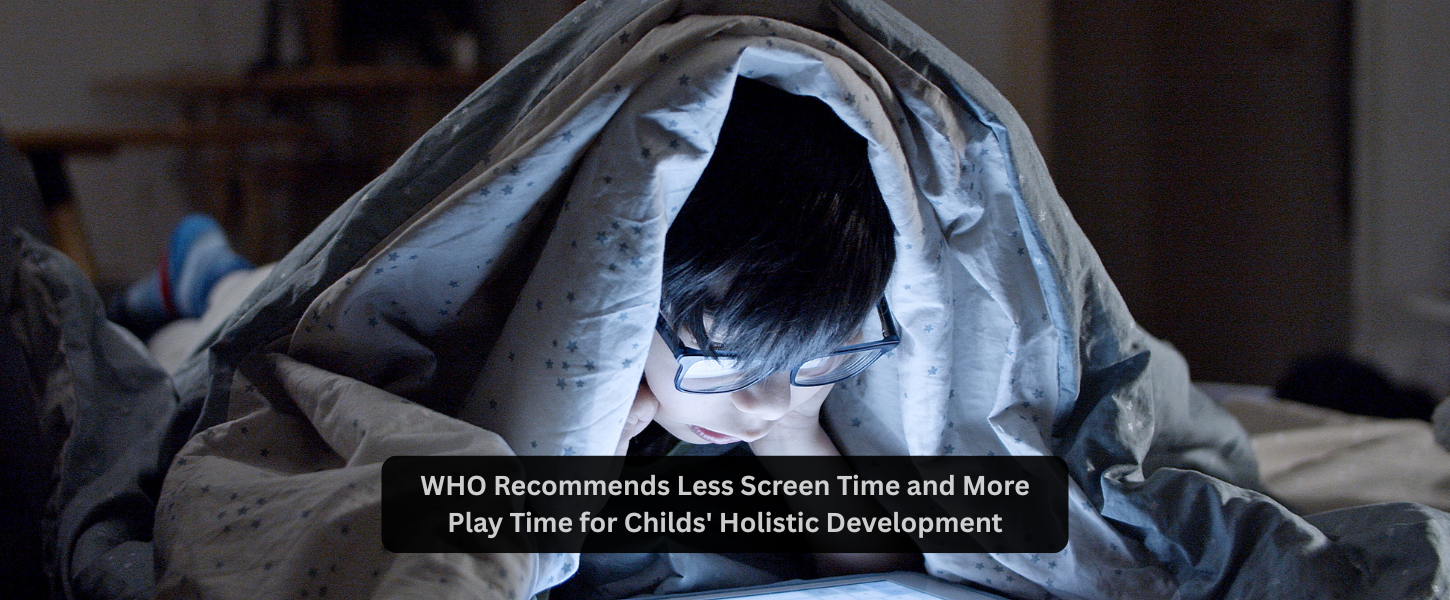

In today’s tech-savvy world, digital devices have become an inseparable part of childhood. While screens can offer learning and entertainment, excessive screen time poses real concerns for a child’s mental and physical well-being. Recognizing these risks, the World Health Organization (WHO) has released clear guidelines: to grow up healthy, children need less screen time and more play time.
In this blog, we’ll explore what the WHO recommends, why active childhood is essential, and how you, as a parent, can strike the right balance to ensure a healthy childhood for your little ones.
According to WHO, children under the age of 5 should spend less time sitting and more time moving. For kids under one year, the recommendation is no screen time at all. For children aged 2 to 4 years, screen time should not exceed one hour per day, and the less, the better.
Instead of screen-based activities, WHO encourages interactive play time, storytelling, and physical movement. These are key for promoting a child’s motor and cognitive development, laying the groundwork for an active childhood and long-term health benefits.
Ref: https://www.who.int/news/item/24-04-2019-to-grow-up-healthy-children-need-to-sit-less-and-play-more
Too much screen time has been linked to sleep disturbances, reduced attention span, and delayed language learning in child development. It also increases sedentary behavior, which may lead to childhood obesity and other health issues.
Children glued to screens miss out on physical interactions, real-life social skills, and spontaneous exploration, essential elements for a healthy childhood.
Play time is more than fun, it’s vital. When kids engage in physical play, whether indoors or outdoors, they improve their coordination, creativity, emotional regulation, and problem-solving abilities.
Interactive play, group games, and even free play spark curiosity and imagination while fostering an active childhood, the very opposite of screen dependency. These activities strengthen both the body and mind, making kids more confident and resilient.
You don’t need to completely ban screens. Instead, aim to manage screen time effectively:
Creating an active childhood doesn’t require fancy toys or schedules. Simple activities like cycling, running, dancing, or playing hide and seek can make a huge difference. Parents, schools, and communities must work together to design spaces and routines that encourage physical movement.

Residential developments like Ashiana Housing’s Kid-Centric Homes are a great example of how communities can support healthy habits. With dedicated play areas, activity-based programs, and regular events, these communities help children grow up in a balanced, nurturing environment, where play time is always a priority over screen time.
WHO believes that a healthy childhood is one where kids are free to move, explore, and play. Their recommendations are a call to action for parents, caregivers, schools, and urban developers to rethink how we raise children in the digital age.
The right balance between screens and physical activity not only improves physical health but also contributes to better sleep, mood, learning, and behavior.
Screen time in moderation, as recommended by WHO, can be part of a child’s routine, but play time is essential for building an active and healthy childhood. From improving physical fitness to boosting creativity and emotional well-being, physical play and reduced screen exposure help kids thrive.
Kid-Centric Homes are thoughtfully designed to support a healthy balance, offering dedicated play areas, engaging activity programs, and a nurturing environment that aligns with WHO’s vision of a healthy childhood. Real estate developers like Ashiana Housing actively promote more play and less screen time, working alongside parents and communities to raise happier, healthier children.
Let’s power down the screens and power up their imagination, because happy, healthy kids are always on the move.
Join 1000+ of fellow readers. Get expert real estate knowledge straight to your inbox absolutely free. Just enter your email address below.


Leave a Reply